
STANDARD test run
16-section channel blueprint · 8 original downloads · 40 screenshots
From brief to blueprint
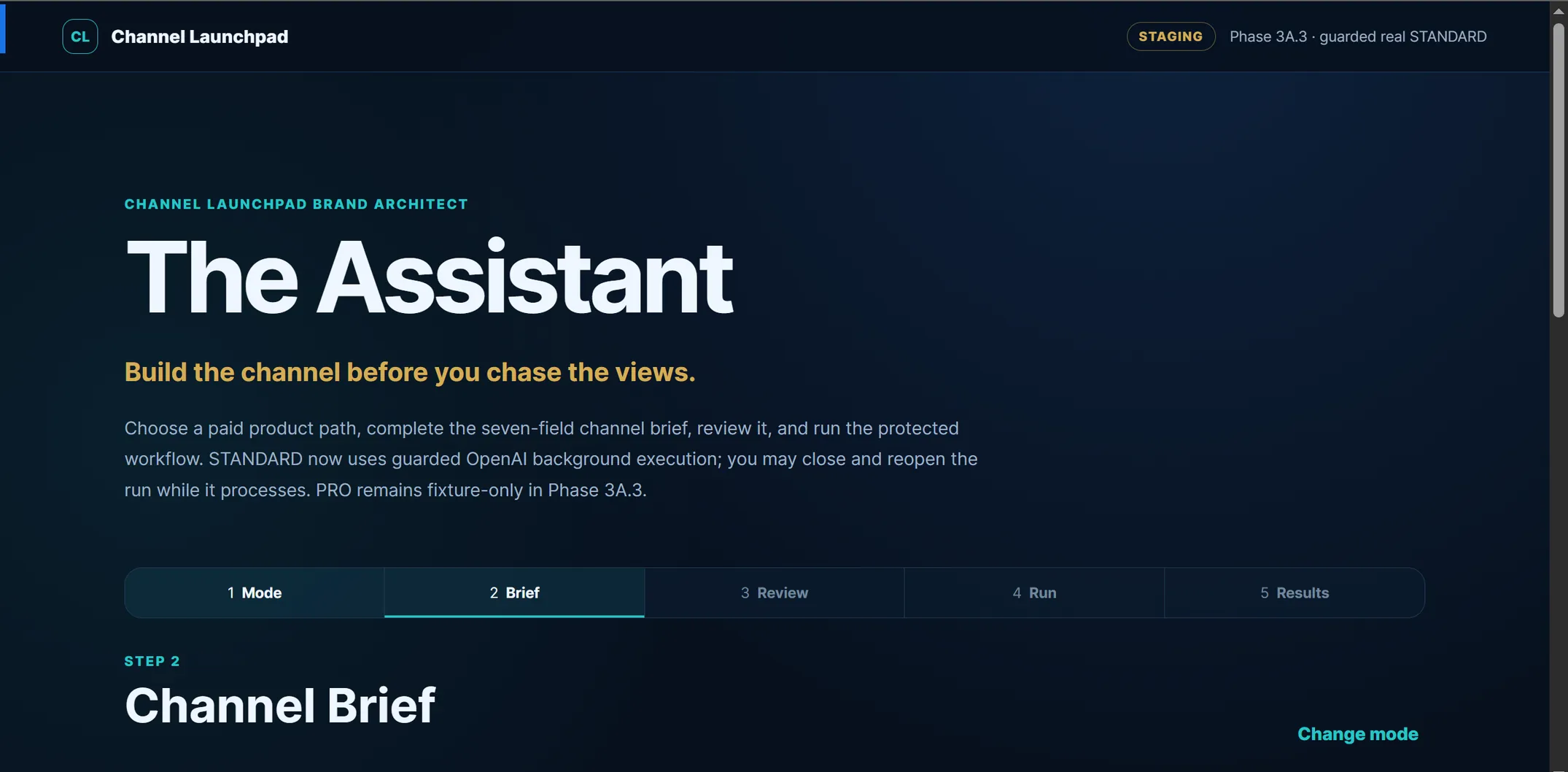
- 01Choose editionSelect the blueprint mode.
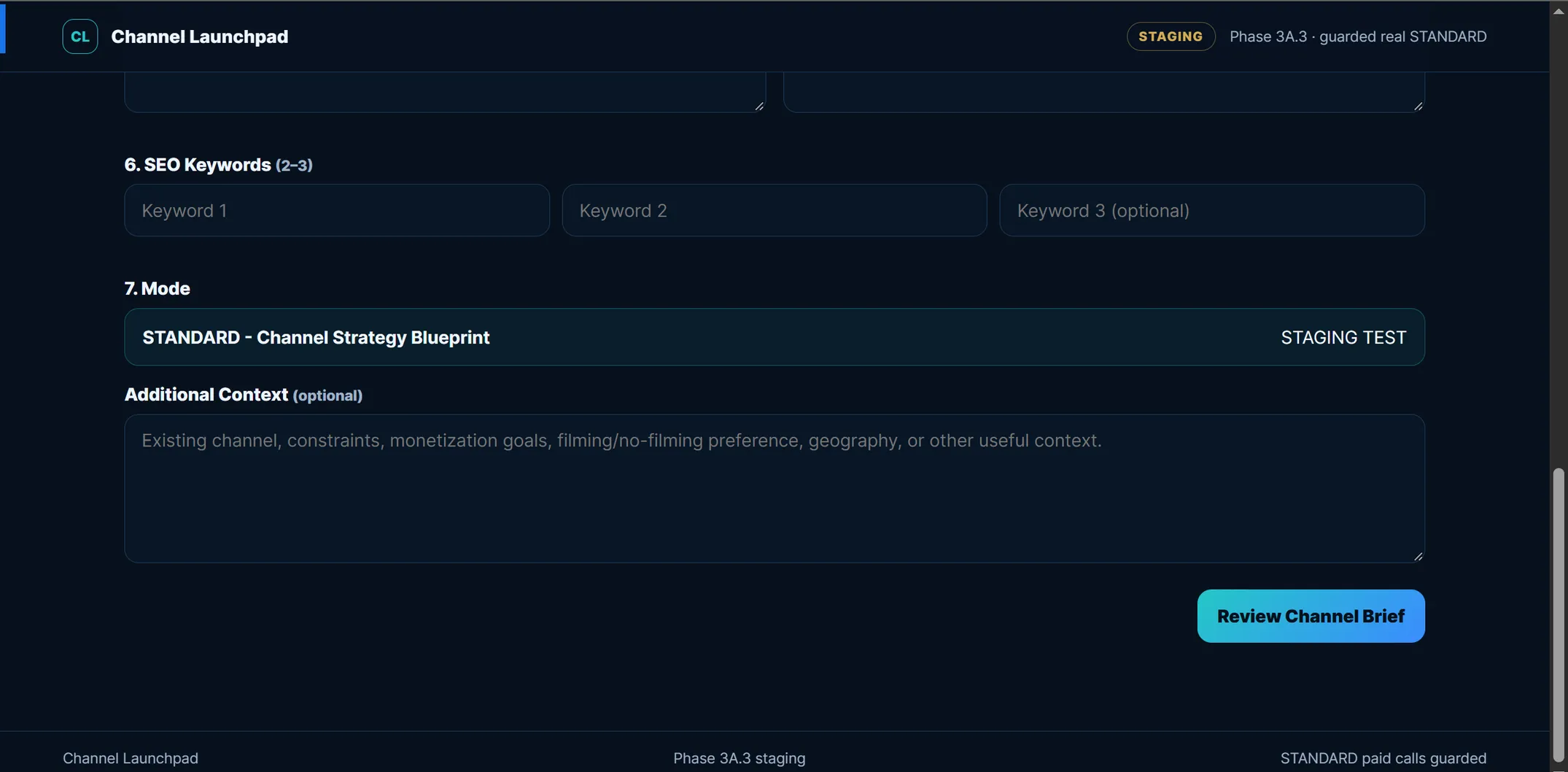
- 02Enter channel briefProvide the channel details and objectives.
- 03Review inputsConfirm the brief and settings.
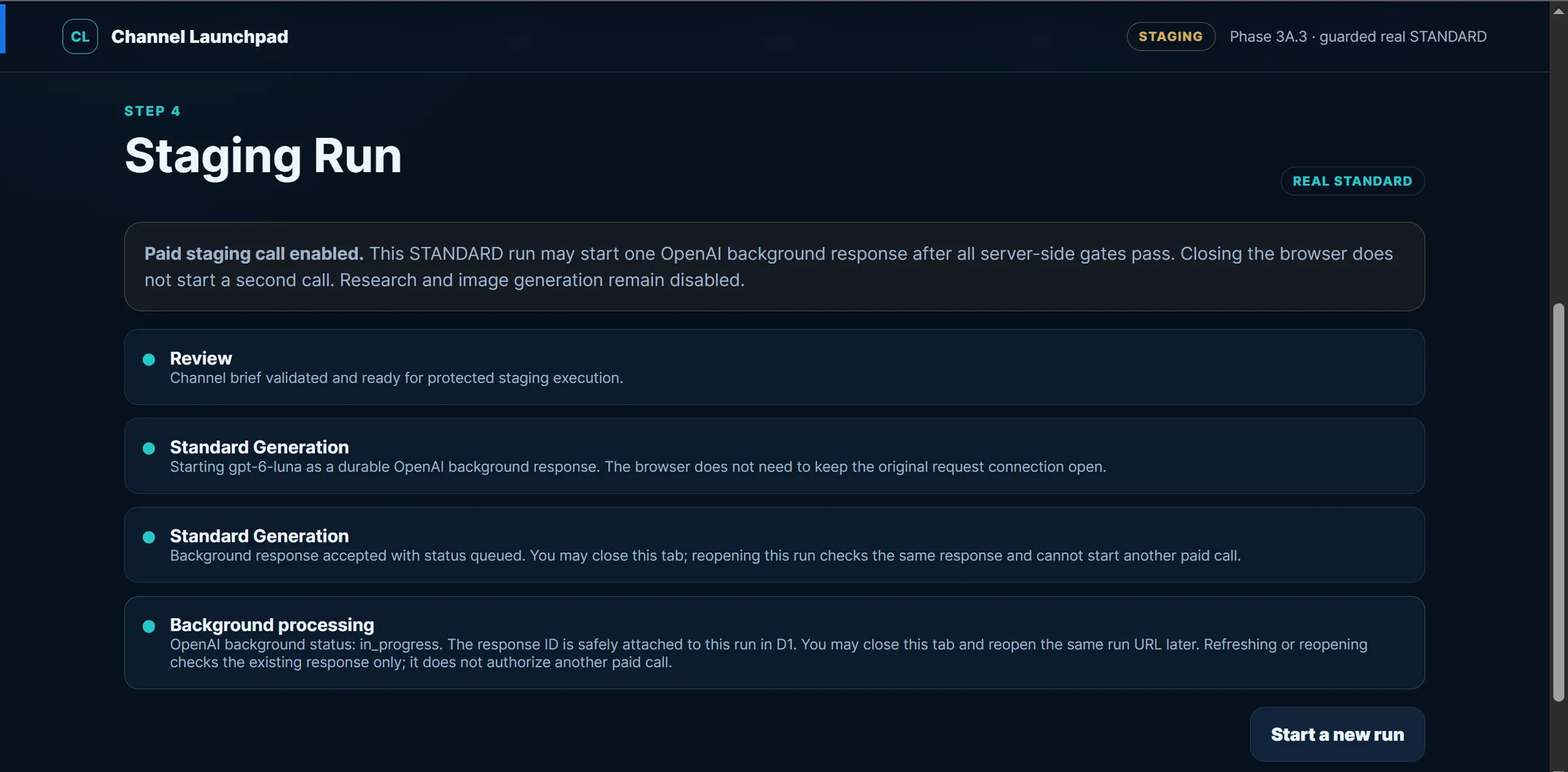
- 04Generate blueprintThe software processes the request.
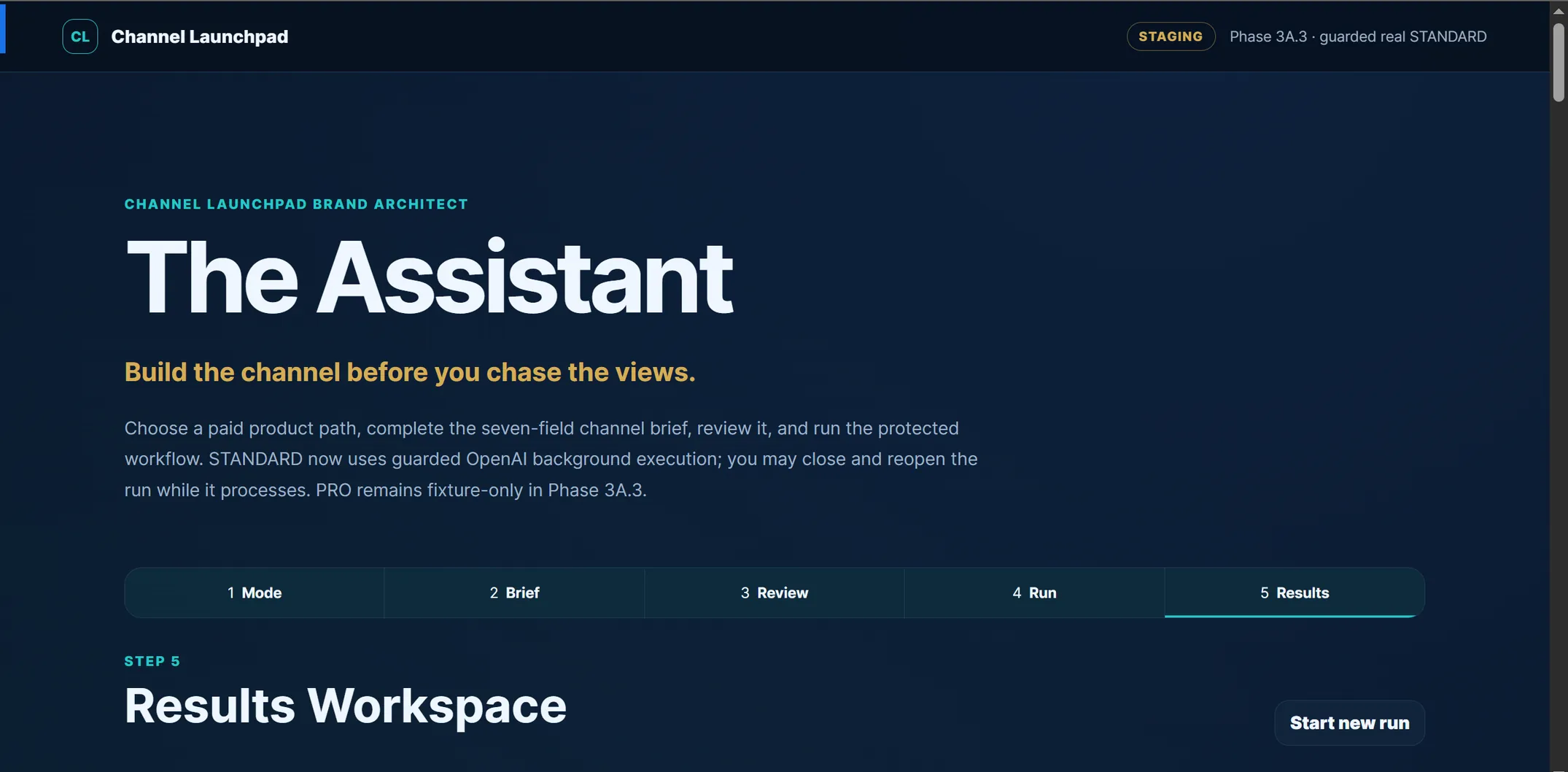
- 05Explore resultsReview the 16-section blueprint and download the files.
8 original result downloads
Files from the archived STANDARD test run.
Complete 16-section blueprint
Read every section of the generated blueprint below.
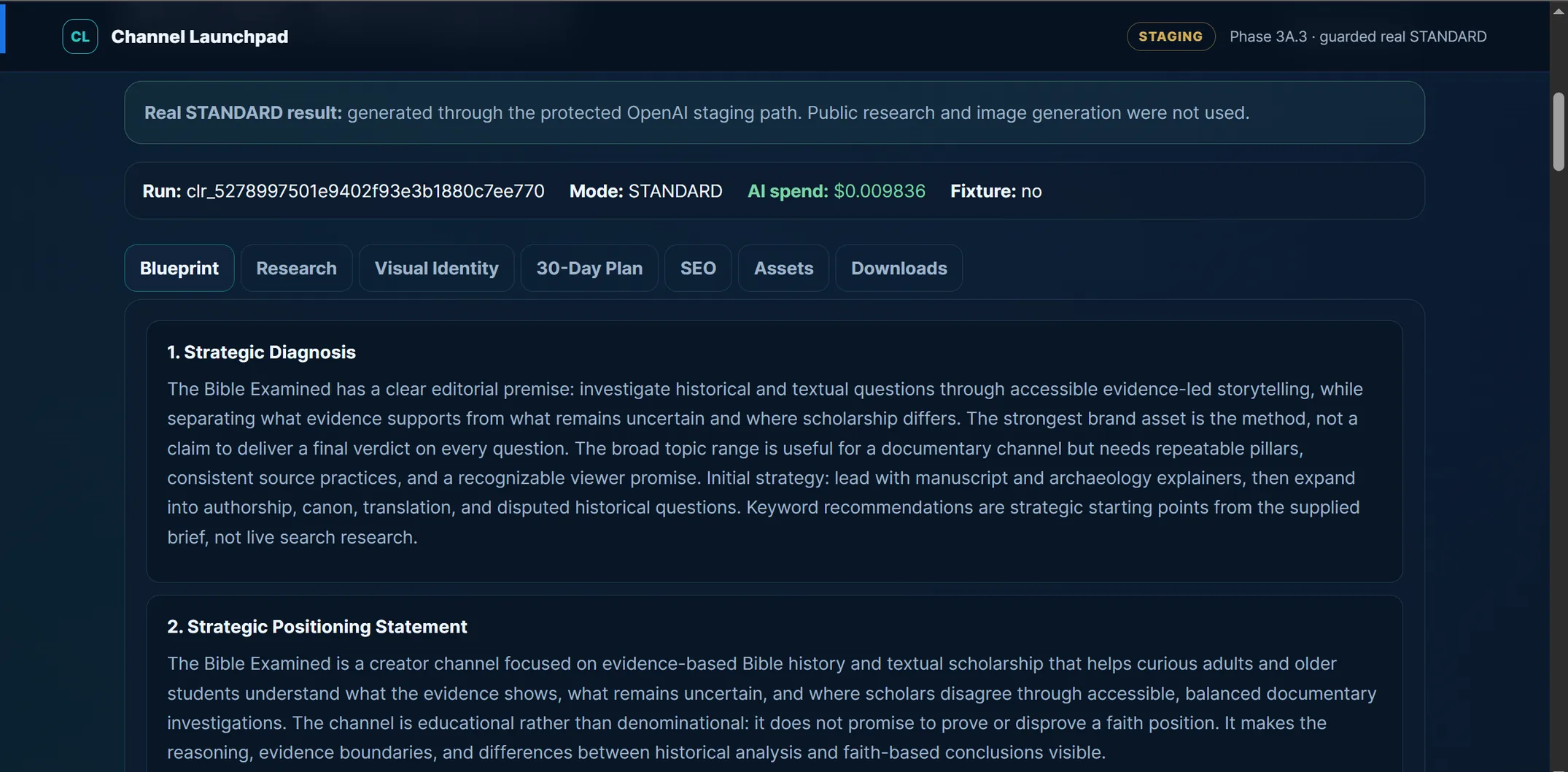
01Strategic Diagnosis
The Bible Examined has a clear editorial premise: investigate historical and textual questions through accessible evidence-led storytelling, while separating what evidence supports from what remains uncertain and where scholarship differs. The strongest brand asset is the method, not a claim to deliver a final verdict on every question. The broad topic range is useful for a documentary channel but needs repeatable pillars, consistent source practices, and a recognizable viewer promise. Initial strategy: lead with manuscript and archaeology explainers, then expand into authorship, canon, translation, and disputed historical questions. Keyword recommendations are strategic starting points from the supplied brief, not live search research.
02Strategic Positioning Statement
The Bible Examined is a creator channel focused on evidence-based Bible history and textual scholarship that helps curious adults and older students understand what the evidence shows, what remains uncertain, and where scholars disagree through accessible, balanced documentary investigations. The channel is educational rather than denominational: it does not promise to prove or disprove a faith position. It makes the reasoning, evidence boundaries, and differences between historical analysis and faith-based conclusions visible.
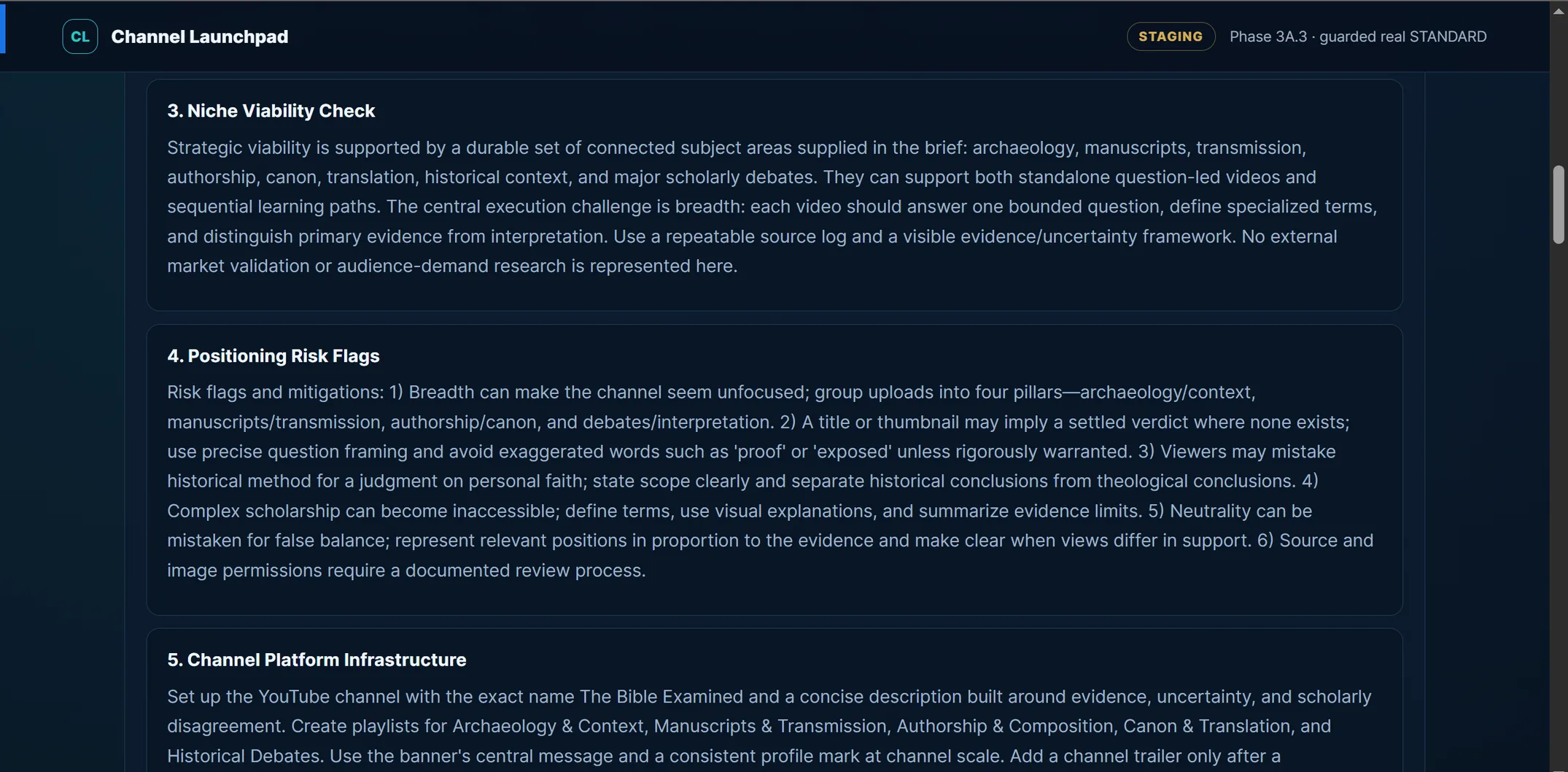
03Niche Viability Check
Strategic viability is supported by a durable set of connected subject areas supplied in the brief: archaeology, manuscripts, transmission, authorship, canon, translation, historical context, and major scholarly debates. They can support both standalone question-led videos and sequential learning paths. The central execution challenge is breadth: each video should answer one bounded question, define specialized terms, and distinguish primary evidence from interpretation. Use a repeatable source log and a visible evidence/uncertainty framework. No external market validation or audience-demand research is represented here.
04Positioning Risk Flags
Risk flags and mitigations: 1) Breadth can make the channel seem unfocused; group uploads into four pillars—archaeology/context, manuscripts/transmission, authorship/canon, and debates/interpretation. 2) A title or thumbnail may imply a settled verdict where none exists; use precise question framing and avoid exaggerated words such as 'proof' or 'exposed' unless rigorously warranted. 3) Viewers may mistake historical method for a judgment on personal faith; state scope clearly and separate historical conclusions from theological conclusions. 4) Complex scholarship can become inaccessible; define terms, use visual explanations, and summarize evidence limits. 5) Neutrality can be mistaken for false balance; represent relevant positions in proportion to the evidence and make clear when views differ in support. 6) Source and image permissions require a documented review process.
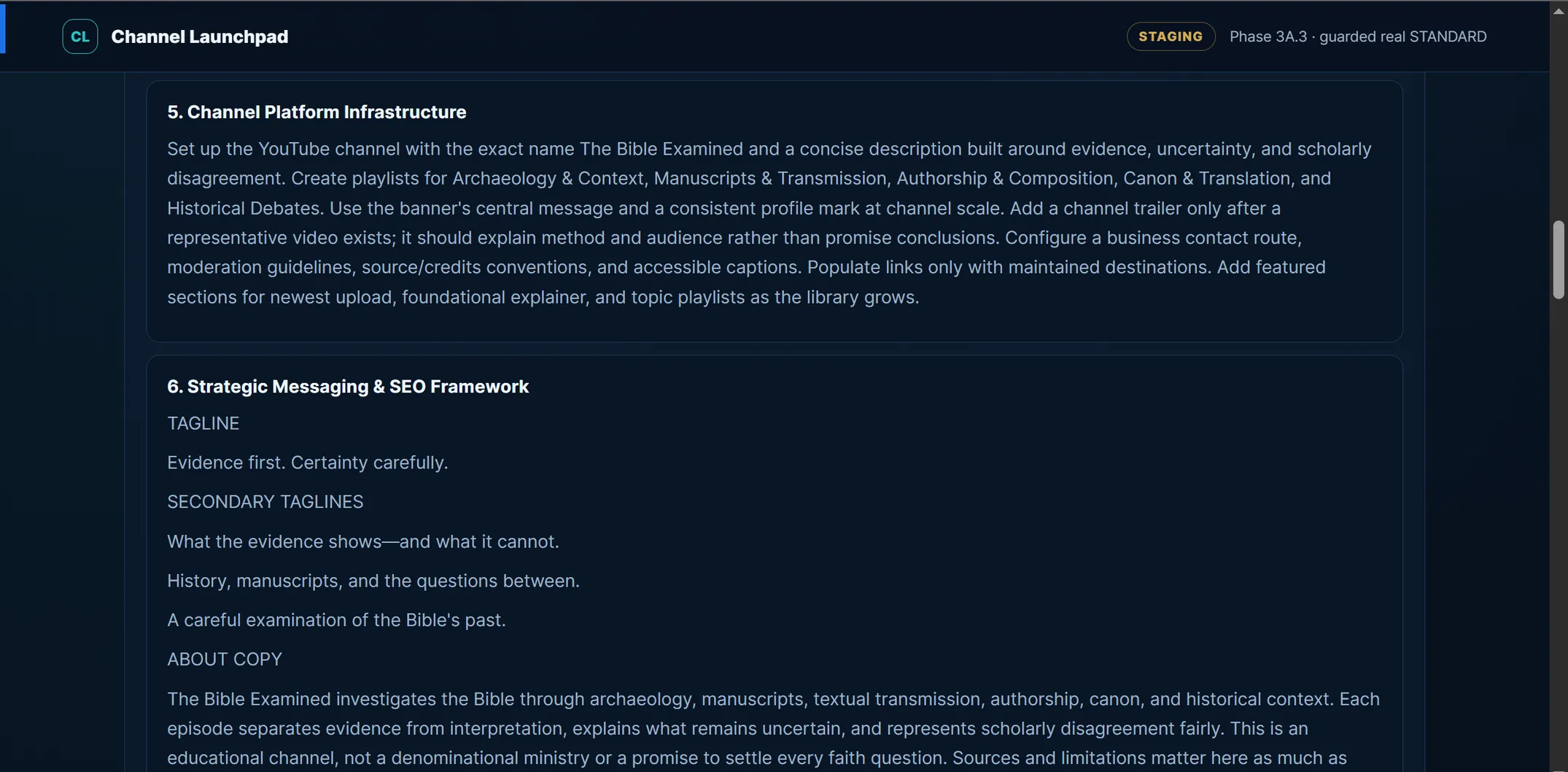
05Channel Platform Infrastructure
Set up the YouTube channel with the exact name The Bible Examined and a concise description built around evidence, uncertainty, and scholarly disagreement. Create playlists for Archaeology & Context, Manuscripts & Transmission, Authorship & Composition, Canon & Translation, and Historical Debates. Use the banner's central message and a consistent profile mark at channel scale. Add a channel trailer only after a representative video exists; it should explain method and audience rather than promise conclusions. Configure a business contact route, moderation guidelines, source/credits conventions, and accessible captions. Populate links only with maintained destinations. Add featured sections for newest upload, foundational explainer, and topic playlists as the library grows.
06Strategic Messaging & SEO Framework
TAGLINE Evidence first. Certainty carefully.
SECONDARY TAGLINES What the evidence shows—and what it cannot. History, manuscripts, and the questions between. A careful examination of the Bible's past.
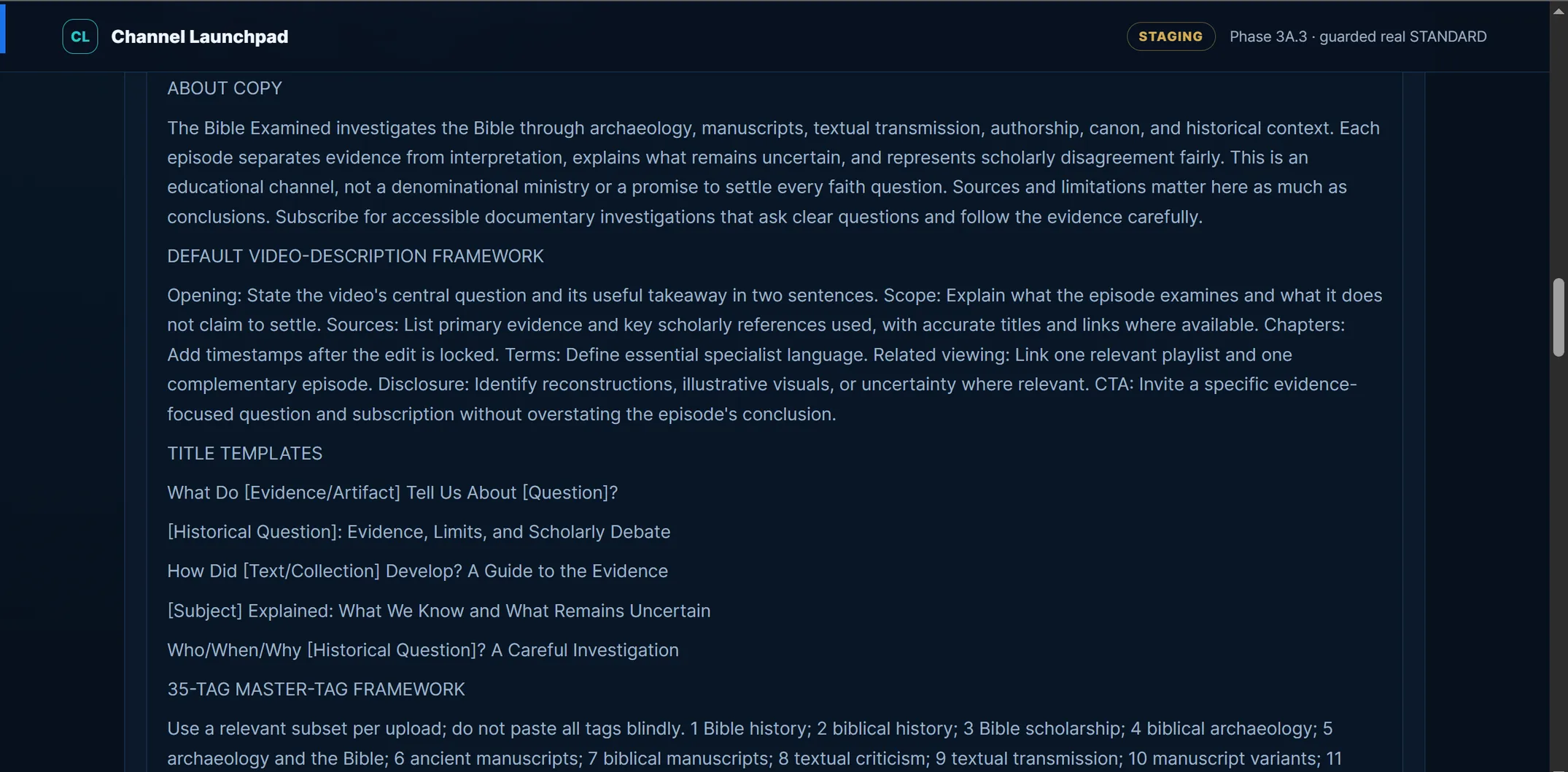
ABOUT COPY The Bible Examined investigates the Bible through archaeology, manuscripts, textual transmission, authorship, canon, and historical context. Each episode separates evidence from interpretation, explains what remains uncertain, and represents scholarly disagreement fairly. This is an educational channel, not a denominational ministry or a promise to settle every faith question. Sources and limitations matter here as much as conclusions. Subscribe for accessible documentary investigations that ask clear questions and follow the evidence carefully.
DEFAULT VIDEO-DESCRIPTION FRAMEWORK Opening: State the video's central question and its useful takeaway in two sentences. Scope: Explain what the episode examines and what it does not claim to settle. Sources: List primary evidence and key scholarly references used, with accurate titles and links where available. Chapters: Add timestamps after the edit is locked. Terms: Define essential specialist language. Related viewing: Link one relevant playlist and one complementary episode. Disclosure: Identify reconstructions, illustrative visuals, or uncertainty where relevant. CTA: Invite a specific evidence-focused question and subscription without overstating the episode's conclusion.
TITLE TEMPLATES What Do [Evidence/Artifact] Tell Us About [Question]? [Historical Question]: Evidence, Limits, and Scholarly Debate How Did [Text/Collection] Develop? A Guide to the Evidence [Subject] Explained: What We Know and What Remains Uncertain Who/When/Why [Historical Question]? A Careful Investigation
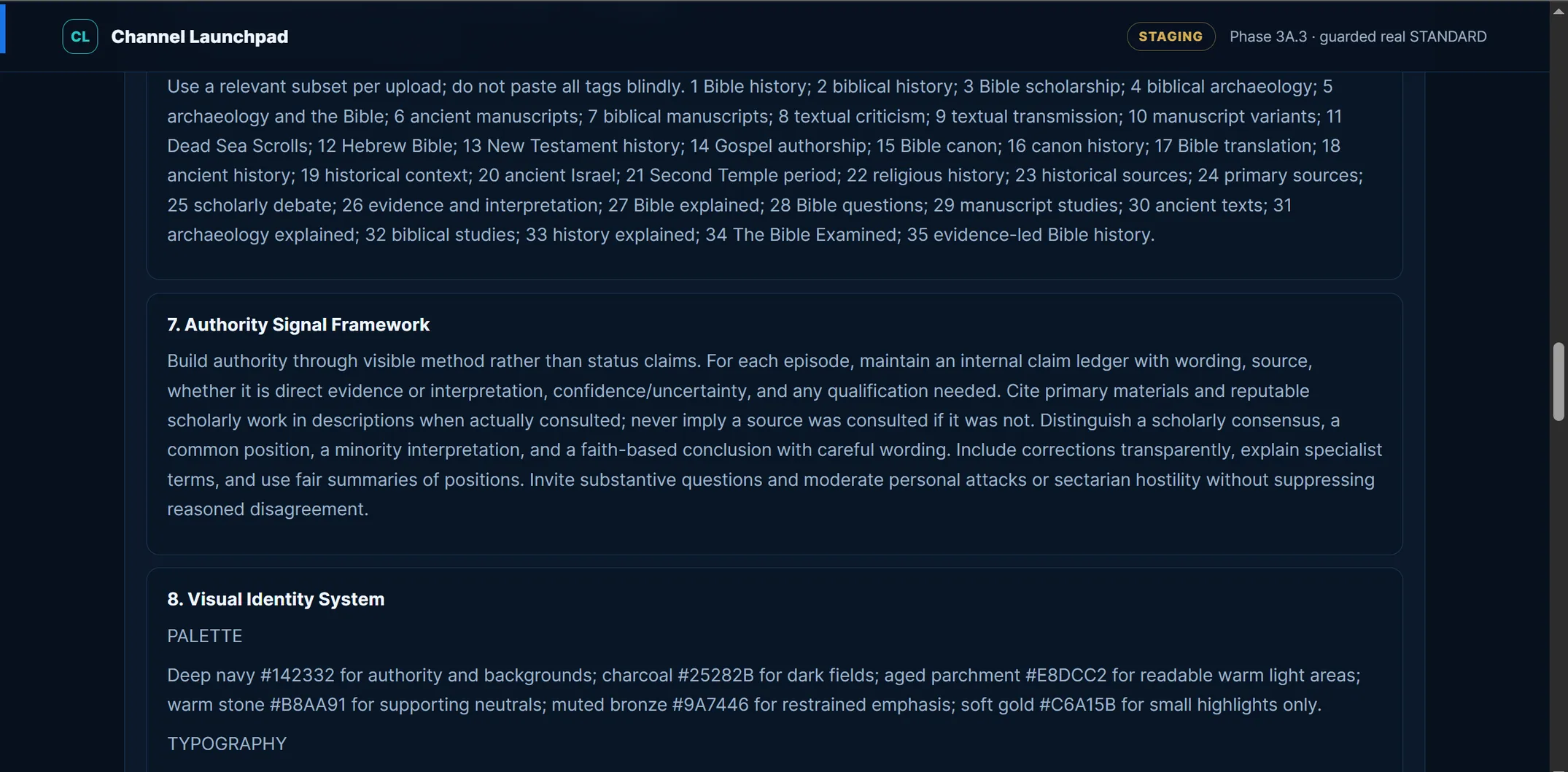
35-TAG MASTER-TAG FRAMEWORK Use a relevant subset per upload; do not paste all tags blindly. 1 Bible history; 2 biblical history; 3 Bible scholarship; 4 biblical archaeology; 5 archaeology and the Bible; 6 ancient manuscripts; 7 biblical manuscripts; 8 textual criticism; 9 textual transmission; 10 manuscript variants; 11 Dead Sea Scrolls; 12 Hebrew Bible; 13 New Testament history; 14 Gospel authorship; 15 Bible canon; 16 canon history; 17 Bible translation; 18 ancient history; 19 historical context; 20 ancient Israel; 21 Second Temple period; 22 religious history; 23 historical sources; 24 primary sources; 25 scholarly debate; 26 evidence and interpretation; 27 Bible explained; 28 Bible questions; 29 manuscript studies; 30 ancient texts; 31 archaeology explained; 32 biblical studies; 33 history explained; 34 The Bible Examined; 35 evidence-led Bible history.
07Authority Signal Framework
Build authority through visible method rather than status claims. For each episode, maintain an internal claim ledger with wording, source, whether it is direct evidence or interpretation, confidence/uncertainty, and any qualification needed. Cite primary materials and reputable scholarly work in descriptions when actually consulted; never imply a source was consulted if it was not. Distinguish a scholarly consensus, a common position, a minority interpretation, and a faith-based conclusion with careful wording. Include corrections transparently, explain specialist terms, and use fair summaries of positions. Invite substantive questions and moderate personal attacks or sectarian hostility without suppressing reasoned disagreement.
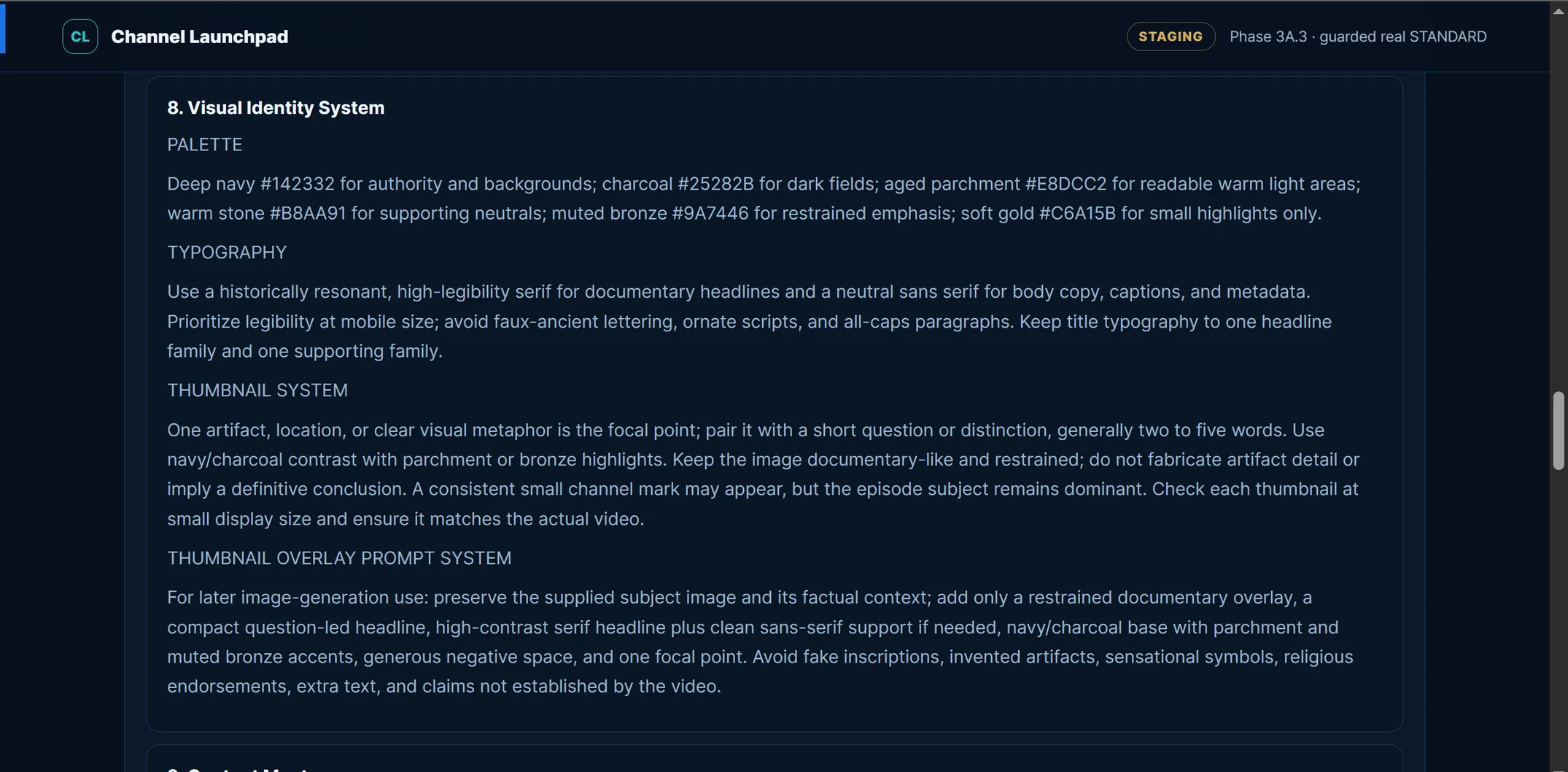
08Visual Identity System
PALETTE Deep navy #142332 for authority and backgrounds; charcoal #25282B for dark fields; aged parchment #E8DCC2 for readable warm light areas; warm stone #B8AA91 for supporting neutrals; muted bronze #9A7446 for restrained emphasis; soft gold #C6A15B for small highlights only.
TYPOGRAPHY Use a historically resonant, high-legibility serif for documentary headlines and a neutral sans serif for body copy, captions, and metadata. Prioritize legibility at mobile size; avoid faux-ancient lettering, ornate scripts, and all-caps paragraphs. Keep title typography to one headline family and one supporting family.
THUMBNAIL SYSTEM One artifact, location, or clear visual metaphor is the focal point; pair it with a short question or distinction, generally two to five words. Use navy/charcoal contrast with parchment or bronze highlights. Keep the image documentary-like and restrained; do not fabricate artifact detail or imply a definitive conclusion. A consistent small channel mark may appear, but the episode subject remains dominant. Check each thumbnail at small display size and ensure it matches the actual video.
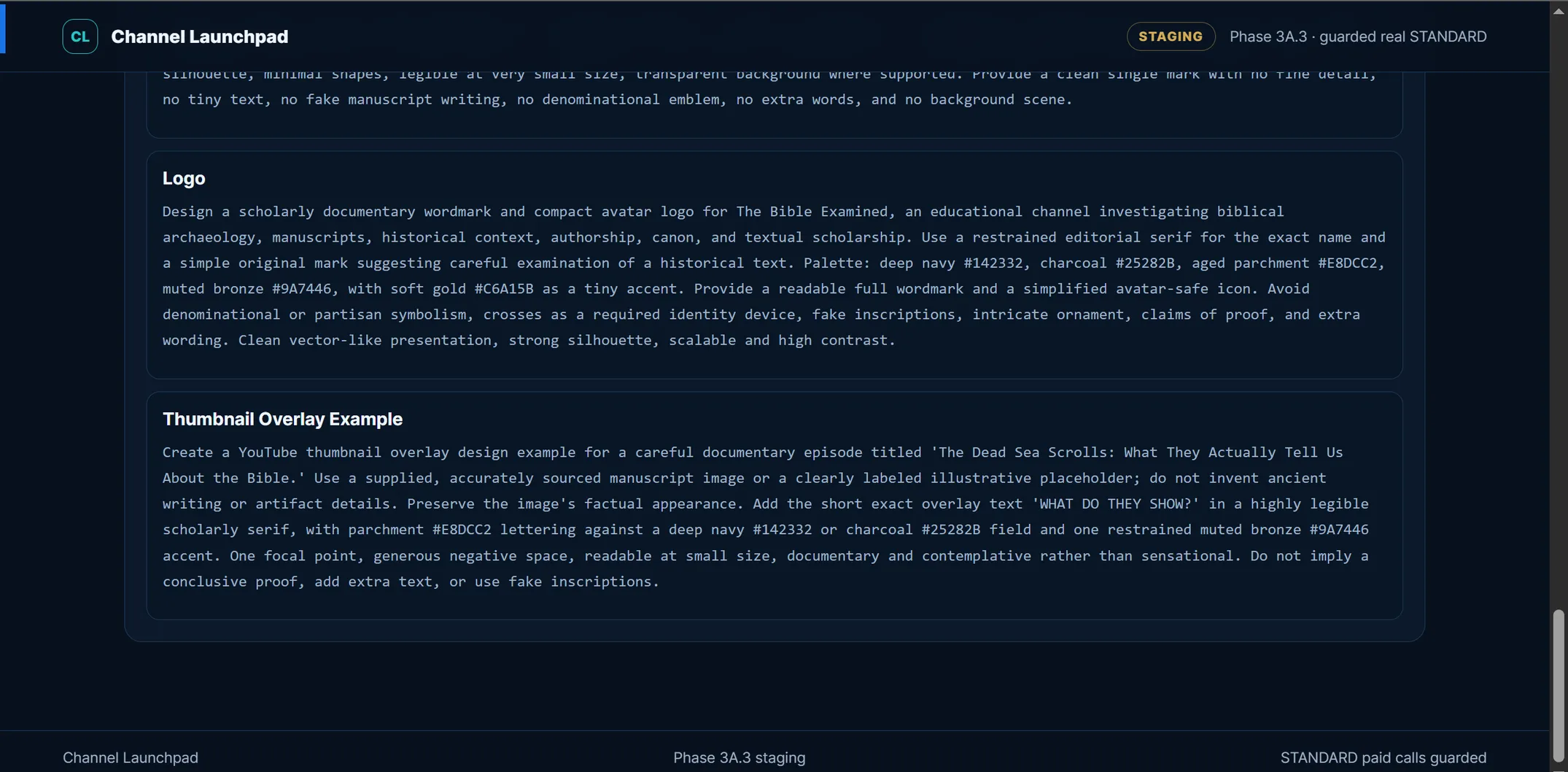
THUMBNAIL OVERLAY PROMPT SYSTEM For later image-generation use: preserve the supplied subject image and its factual context; add only a restrained documentary overlay, a compact question-led headline, high-contrast serif headline plus clean sans-serif support if needed, navy/charcoal base with parchment and muted bronze accents, generous negative space, and one focal point. Avoid fake inscriptions, invented artifacts, sensational symbols, religious endorsements, extra text, and claims not established by the video.
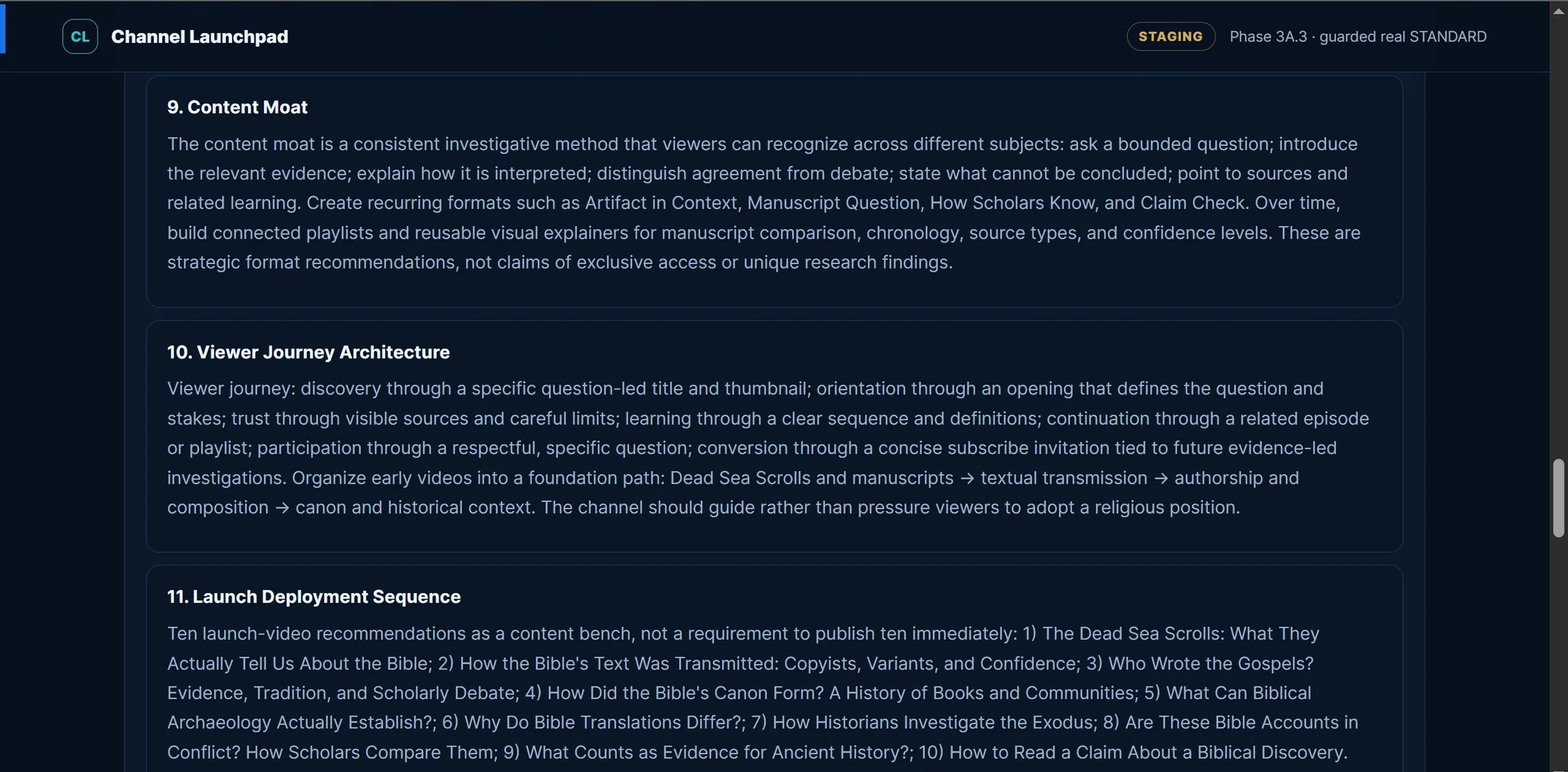
09Content Moat
The content moat is a consistent investigative method that viewers can recognize across different subjects: ask a bounded question; introduce the relevant evidence; explain how it is interpreted; distinguish agreement from debate; state what cannot be concluded; point to sources and related learning. Create recurring formats such as Artifact in Context, Manuscript Question, How Scholars Know, and Claim Check. Over time, build connected playlists and reusable visual explainers for manuscript comparison, chronology, source types, and confidence levels. These are strategic format recommendations, not claims of exclusive access or unique research findings.
10Viewer Journey Architecture
Viewer journey: discovery through a specific question-led title and thumbnail; orientation through an opening that defines the question and stakes; trust through visible sources and careful limits; learning through a clear sequence and definitions; continuation through a related episode or playlist; participation through a respectful, specific question; conversion through a concise subscribe invitation tied to future evidence-led investigations. Organize early videos into a foundation path: Dead Sea Scrolls and manuscripts → textual transmission → authorship and composition → canon and historical context. The channel should guide rather than pressure viewers to adopt a religious position.
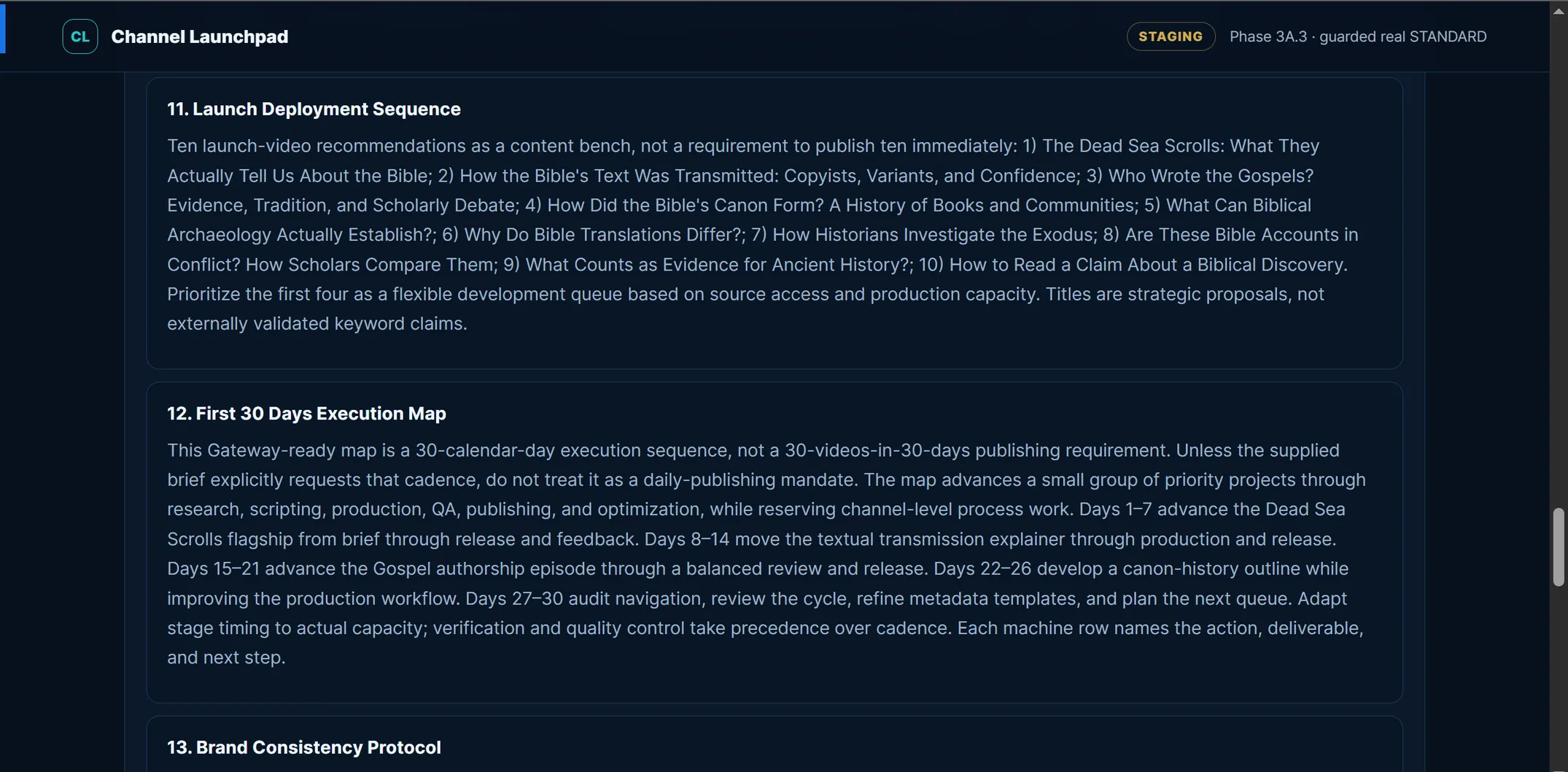
11Launch Deployment Sequence
Ten launch-video recommendations as a content bench, not a requirement to publish ten immediately: 1) The Dead Sea Scrolls: What They Actually Tell Us About the Bible; 2) How the Bible's Text Was Transmitted: Copyists, Variants, and Confidence; 3) Who Wrote the Gospels? Evidence, Tradition, and Scholarly Debate; 4) How Did the Bible's Canon Form? A History of Books and Communities; 5) What Can Biblical Archaeology Actually Establish?; 6) Why Do Bible Translations Differ?; 7) How Historians Investigate the Exodus; 8) Are These Bible Accounts in Conflict? How Scholars Compare Them; 9) What Counts as Evidence for Ancient History?; 10) How to Read a Claim About a Biblical Discovery. Prioritize the first four as a flexible development queue based on source access and production capacity. Titles are strategic proposals, not externally validated keyword claims.
12First 30 Days Execution Map
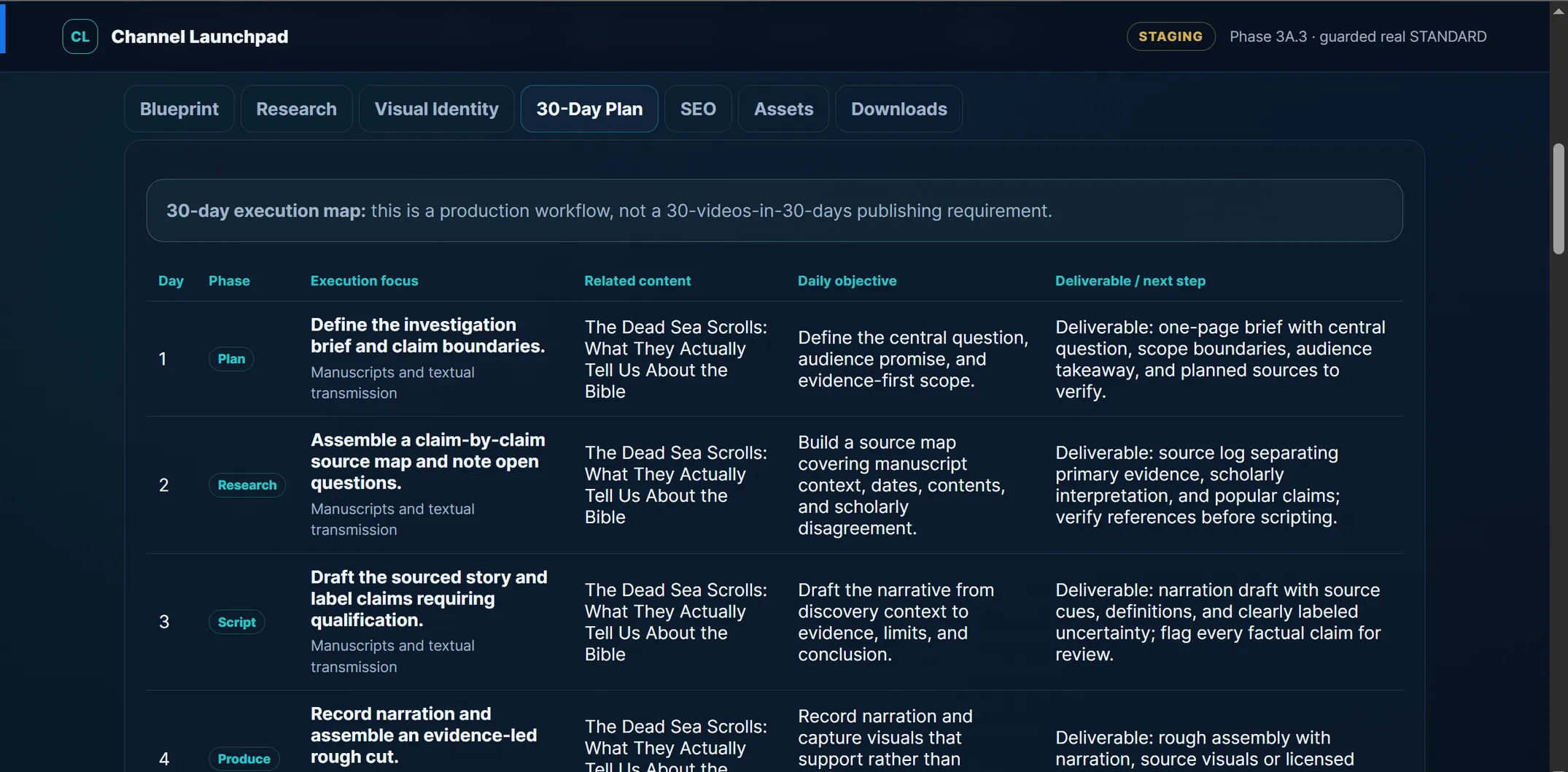
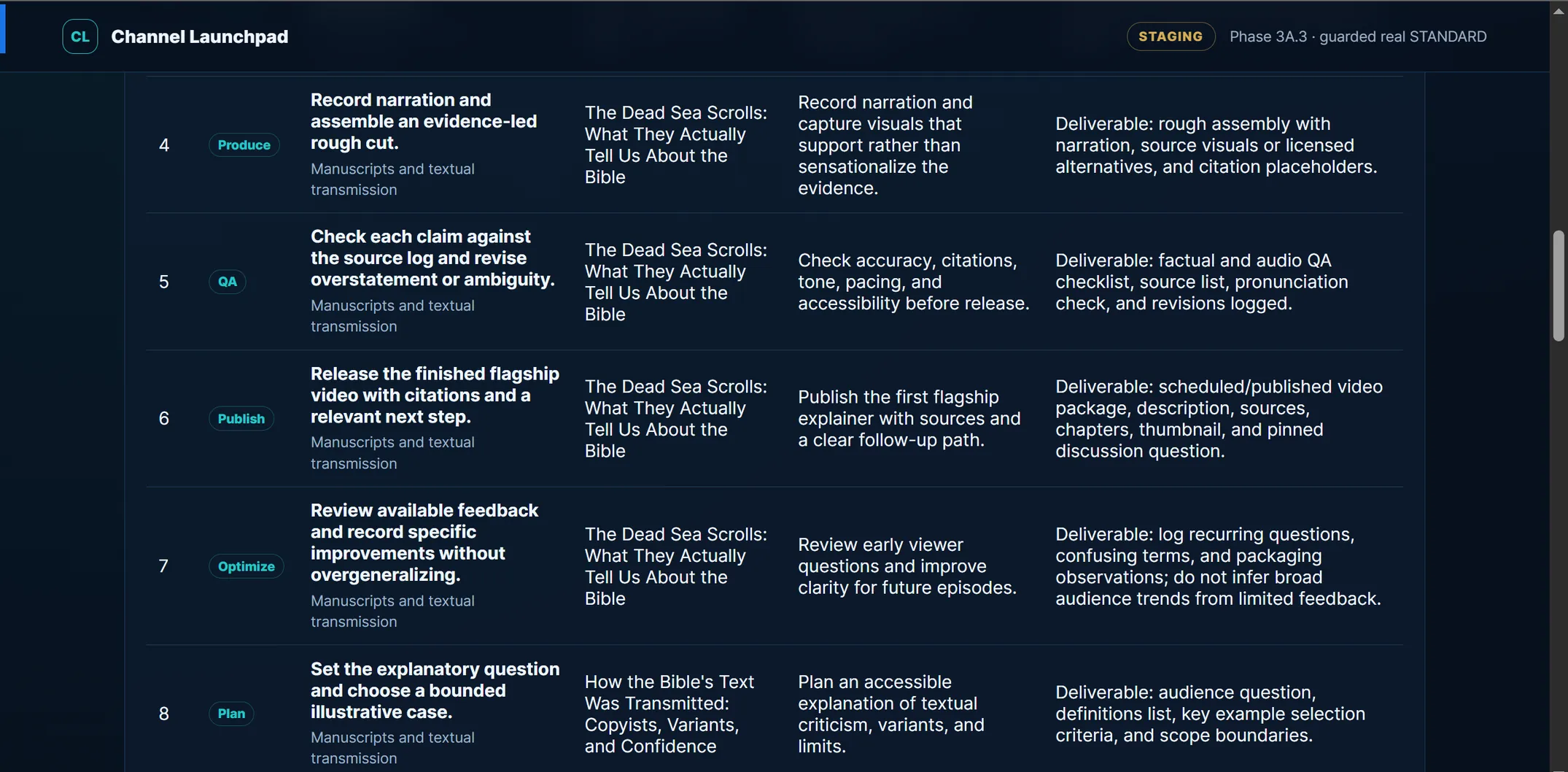
This Gateway-ready map is a 30-calendar-day execution sequence, not a 30-videos-in-30-days publishing requirement. Unless the supplied brief explicitly requests that cadence, do not treat it as a daily-publishing mandate. The map advances a small group of priority projects through research, scripting, production, QA, publishing, and optimization, while reserving channel-level process work. Days 1–7 advance the Dead Sea Scrolls flagship from brief through release and feedback. Days 8–14 move the textual transmission explainer through production and release. Days 15–21 advance the Gospel authorship episode through a balanced review and release. Days 22–26 develop a canon-history outline while improving the production workflow. Days 27–30 audit navigation, review the cycle, refine metadata templates, and plan the next queue. Adapt stage timing to actual capacity; verification and quality control take precedence over cadence. Each machine row names the action, deliverable, and next step.
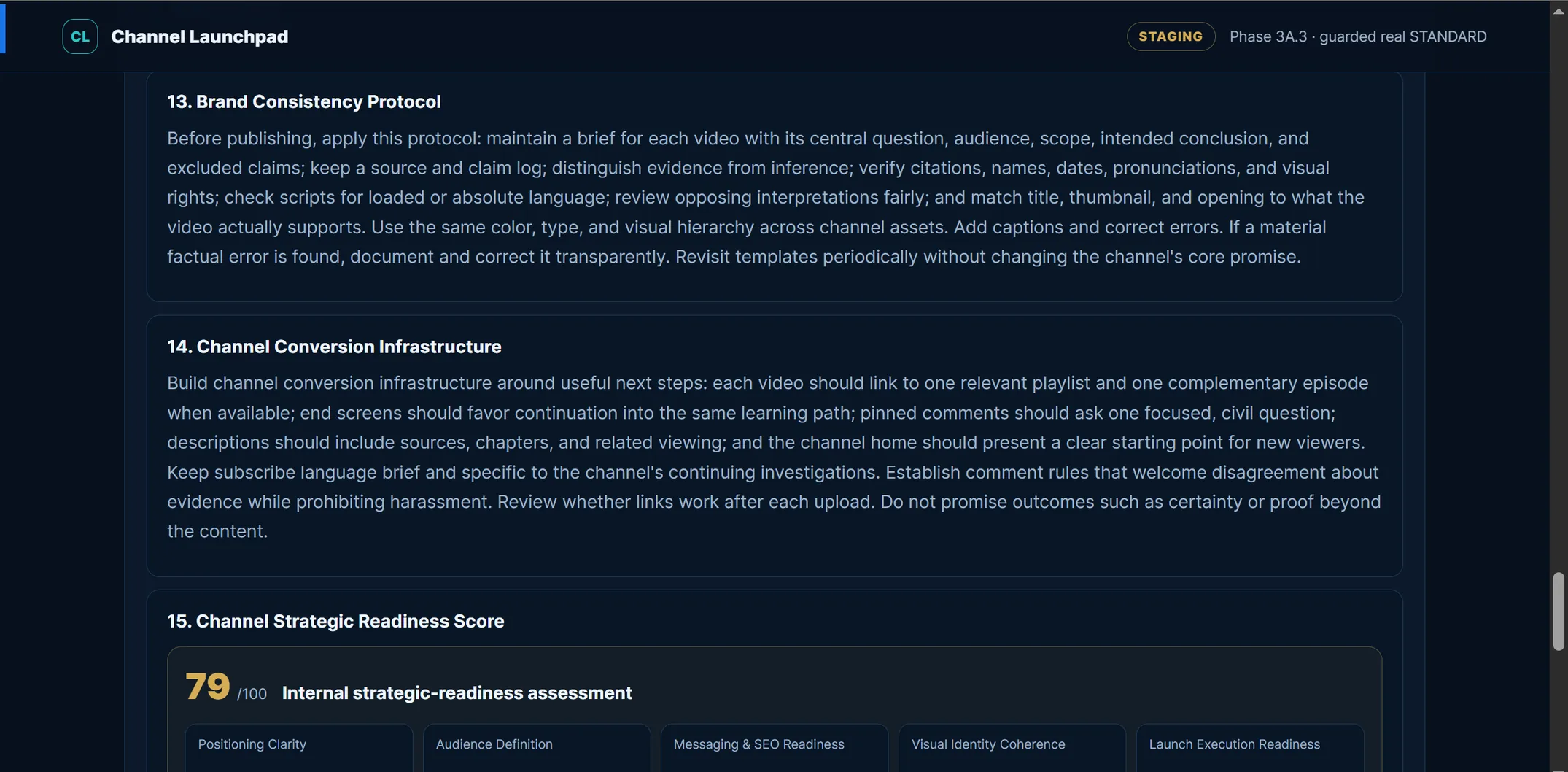
13Brand Consistency Protocol
Before publishing, apply this protocol: maintain a brief for each video with its central question, audience, scope, intended conclusion, and excluded claims; keep a source and claim log; distinguish evidence from inference; verify citations, names, dates, pronunciations, and visual rights; check scripts for loaded or absolute language; review opposing interpretations fairly; and match title, thumbnail, and opening to what the video actually supports. Use the same color, type, and visual hierarchy across channel assets. Add captions and correct errors. If a material factual error is found, document and correct it transparently. Revisit templates periodically without changing the channel's core promise.
14Channel Conversion Infrastructure
Build channel conversion infrastructure around useful next steps: each video should link to one relevant playlist and one complementary episode when available; end screens should favor continuation into the same learning path; pinned comments should ask one focused, civil question; descriptions should include sources, chapters, and related viewing; and the channel home should present a clear starting point for new viewers. Keep subscribe language brief and specific to the channel's continuing investigations. Establish comment rules that welcome disagreement about evidence while prohibiting harassment. Review whether links work after each upload. Do not promise outcomes such as certainty or proof beyond the content.
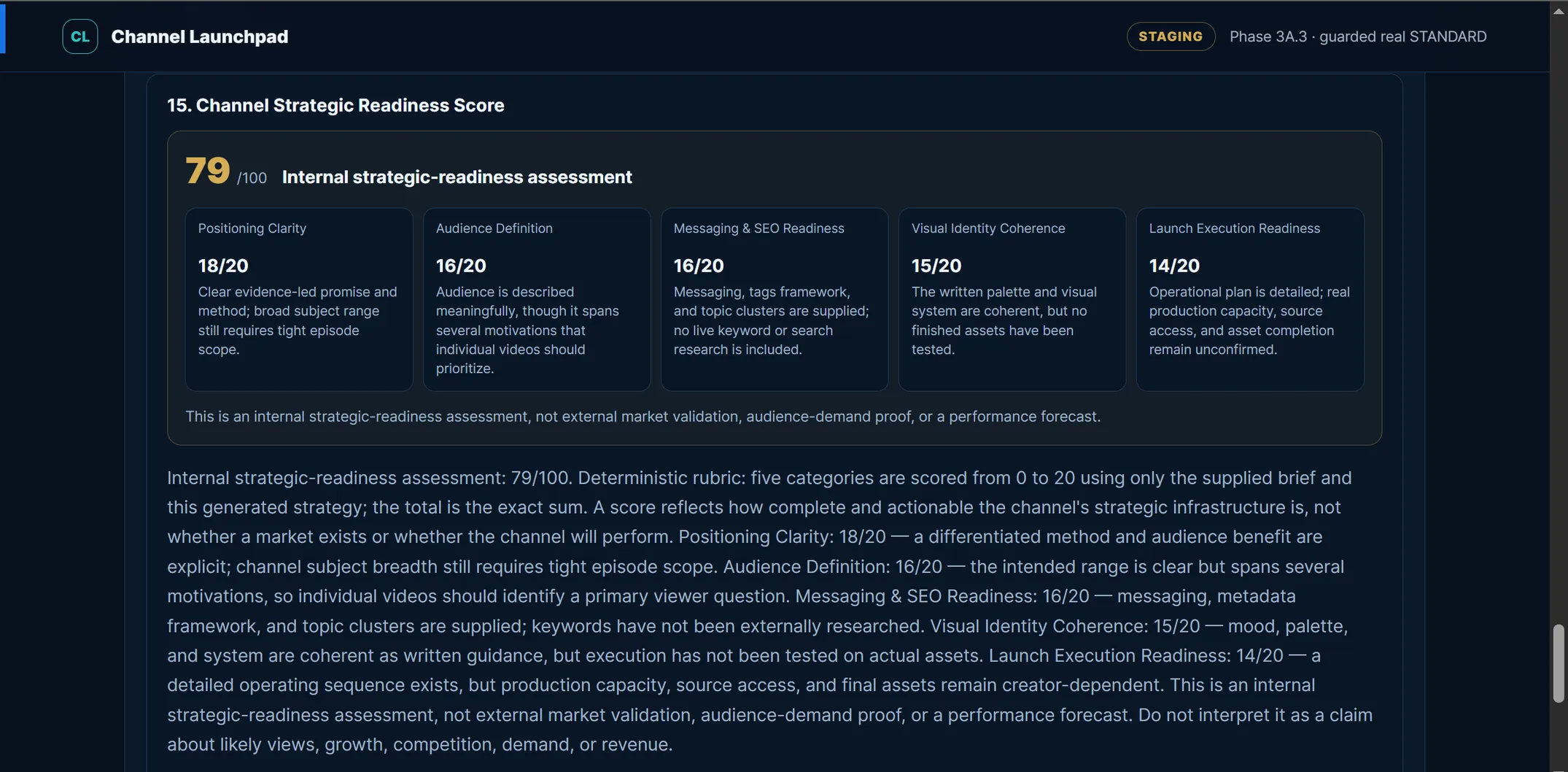
15Channel Strategic Readiness Score
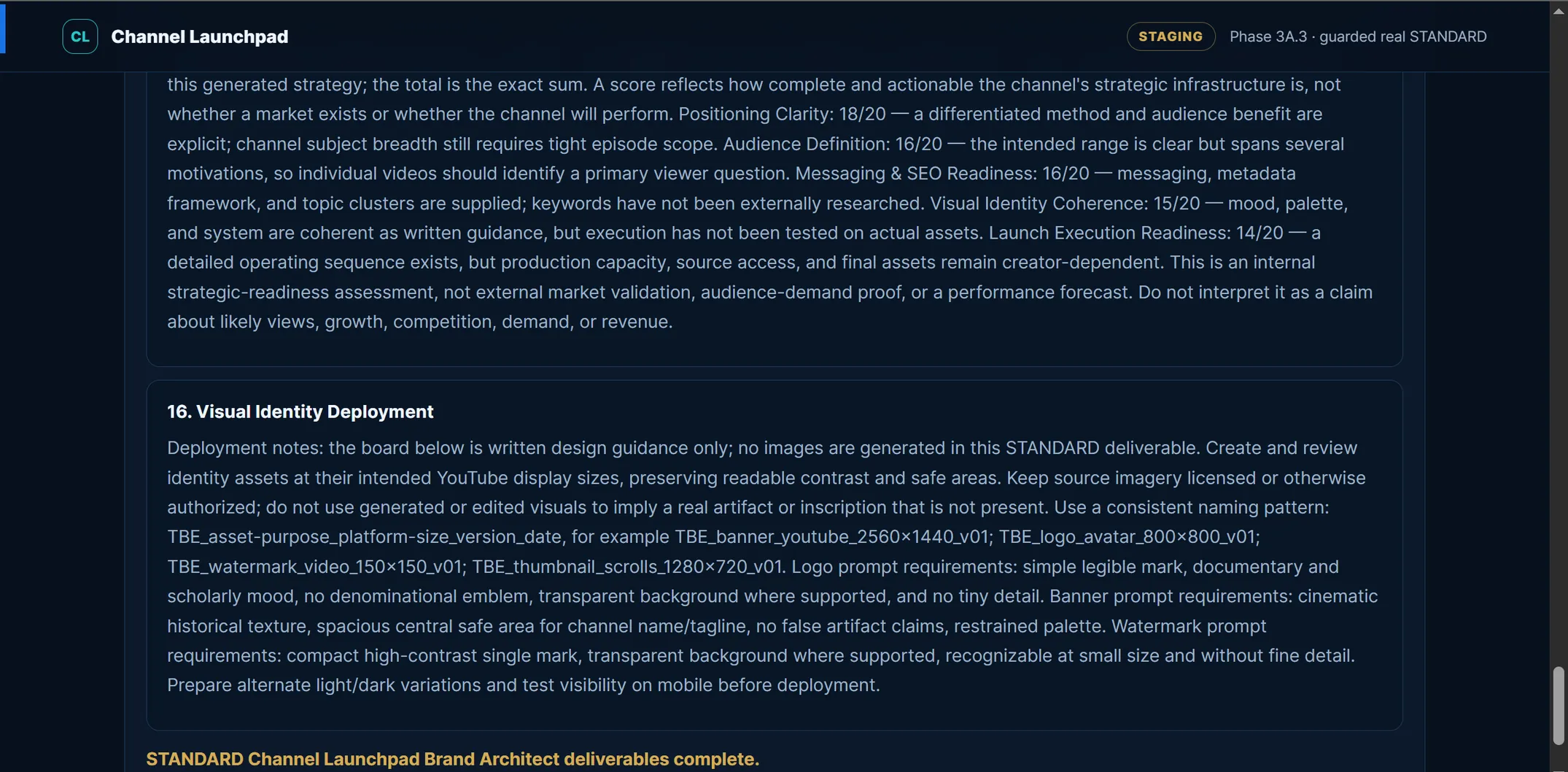
Internal strategic-readiness assessment: 79/100. Deterministic rubric: five categories are scored from 0 to 20 using only the supplied brief and this generated strategy; the total is the exact sum. A score reflects how complete and actionable the channel's strategic infrastructure is, not whether a market exists or whether the channel will perform. Positioning Clarity: 18/20 — a differentiated method and audience benefit are explicit; channel subject breadth still requires tight episode scope. Audience Definition: 16/20 — the intended range is clear but spans several motivations, so individual videos should identify a primary viewer question. Messaging & SEO Readiness: 16/20 — messaging, metadata framework, and topic clusters are supplied; keywords have not been externally researched. Visual Identity Coherence: 15/20 — mood, palette, and system are coherent as written guidance, but execution has not been tested on actual assets. Launch Execution Readiness: 14/20 — a detailed operating sequence exists, but production capacity, source access, and final assets remain creator-dependent. This is an internal strategic-readiness assessment, not external market validation, audience-demand proof, or a performance forecast. Do not interpret it as a claim about likely views, growth, competition, demand, or revenue.
16Visual Identity Deployment
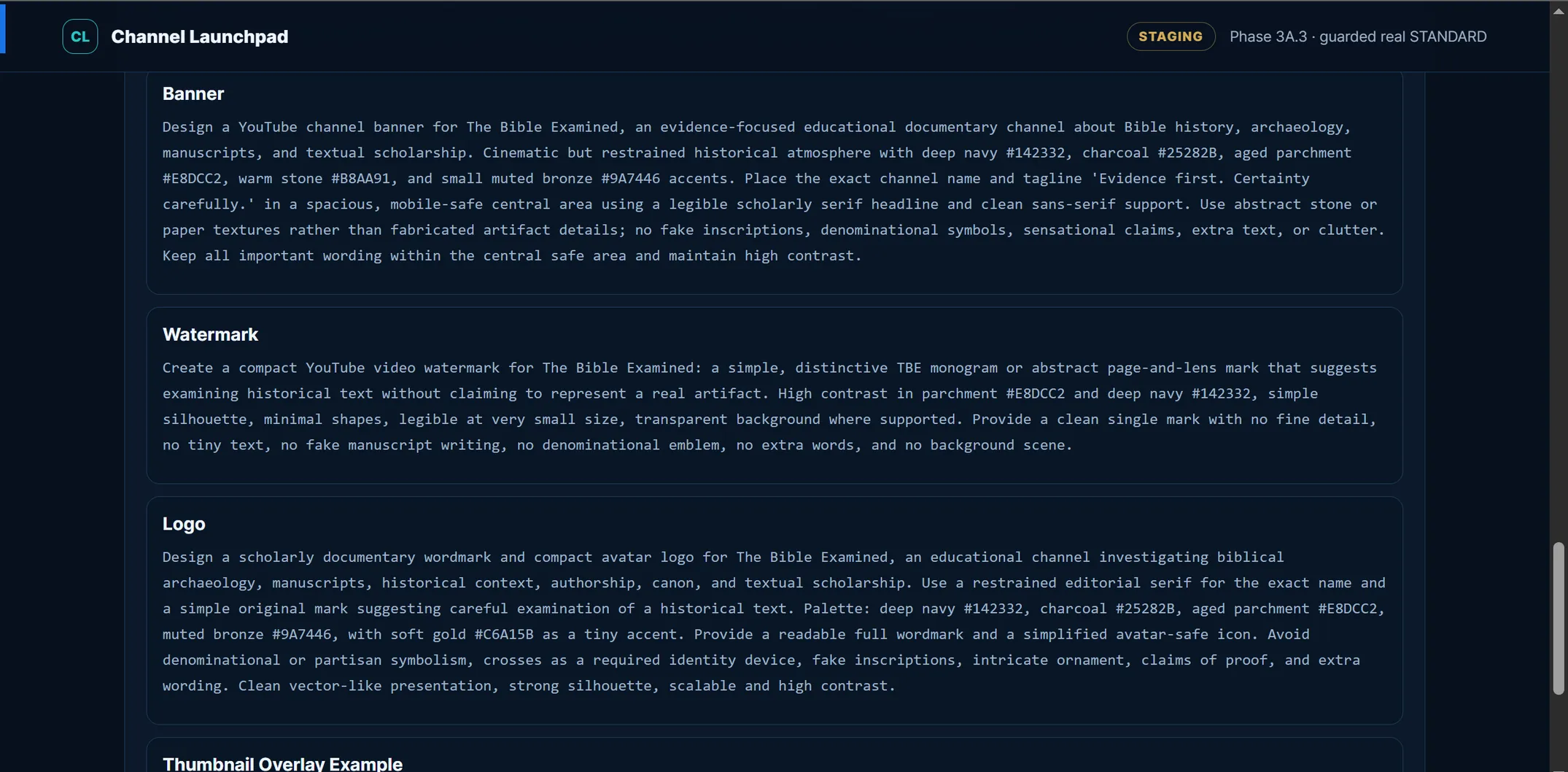
Deployment notes: the board below is written design guidance only; no images are generated in this STANDARD deliverable. Create and review identity assets at their intended YouTube display sizes, preserving readable contrast and safe areas. Keep source imagery licensed or otherwise authorized; do not use generated or edited visuals to imply a real artifact or inscription that is not present. Use a consistent naming pattern: TBE_asset-purpose_platform-size_version_date, for example TBE_banner_youtube_2560x1440_v01; TBE_logo_avatar_800x800_v01; TBE_watermark_video_150x150_v01; TBE_thumbnail_scrolls_1280x720_v01. Logo prompt requirements: simple legible mark, documentary and scholarly mood, no denominational emblem, transparent background where supported, and no tiny detail. Banner prompt requirements: cinematic historical texture, spacious central safe area for channel name/tagline, no false artifact claims, restrained palette. Watermark prompt requirements: compact high-contrast single mark, transparent background where supported, recognizable at small size and without fine detail. Prepare alternate light/dark variations and test visibility on mobile before deployment.
Strategic Readiness Score Summary
79/100 — Internal strategic-readiness assessment
- Positioning Clarity: 18/20 — Clear evidence-led promise and method; broad subject range still requires tight episode scope.
- Audience Definition: 16/20 — Audience is described meaningfully, though it spans several motivations that individual videos should prioritize.
- Messaging & SEO Readiness: 16/20 — Messaging, tags framework, and topic clusters are supplied; no live keyword or search research is included.
- Visual Identity Coherence: 15/20 — The written palette and visual system are coherent, but no finished assets have been tested.
- Launch Execution Readiness: 14/20 — Operational plan is detailed; real production capacity, source access, and asset completion remain unconfirmed.
This is an internal strategic-readiness assessment, not external market validation, audience-demand proof, or a performance forecast.
40 test-run screenshots
Original application sequence, from setup through results.
View all 40 screenshots
Screen 01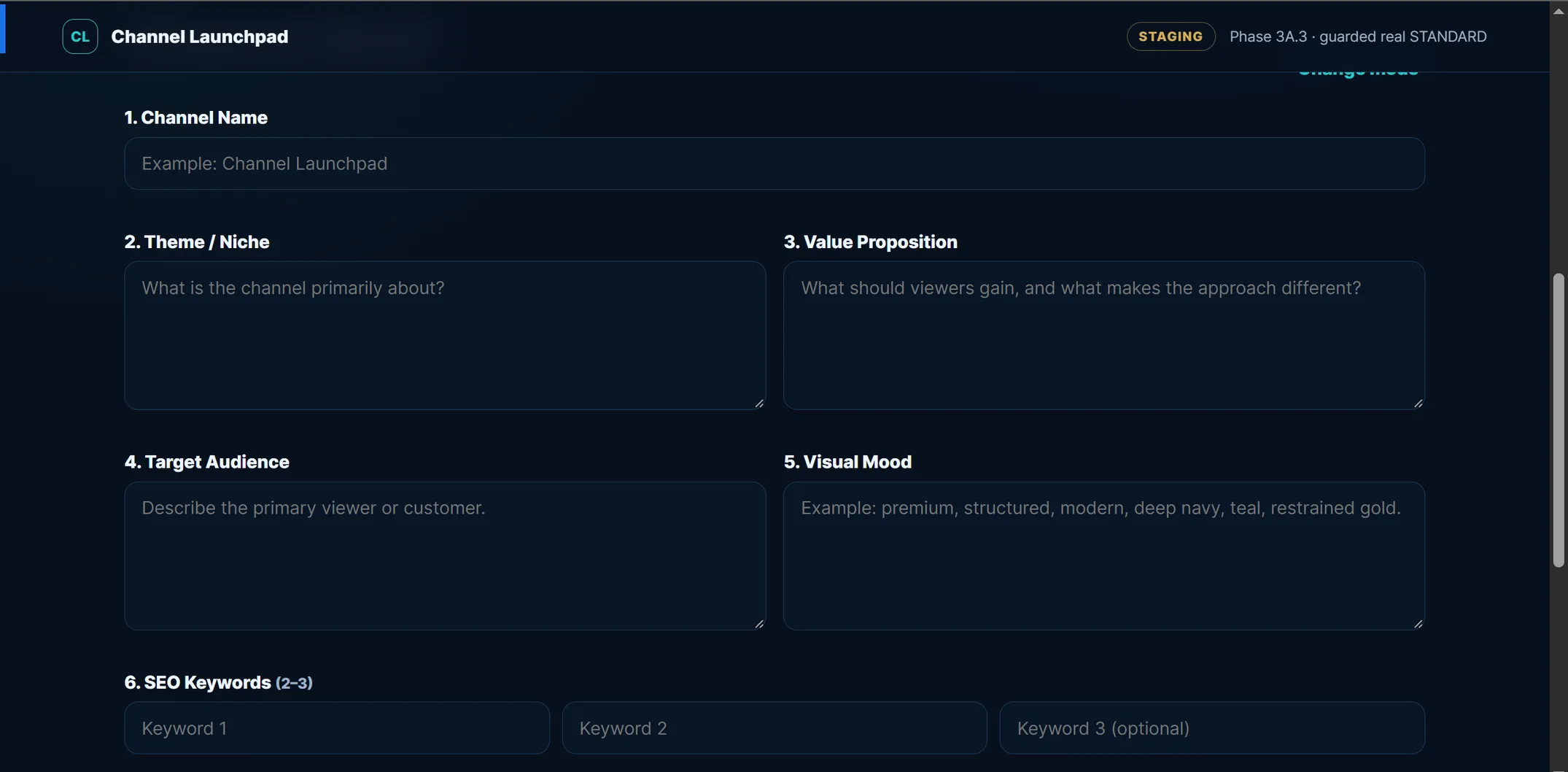 Screen 02
 Screen 03
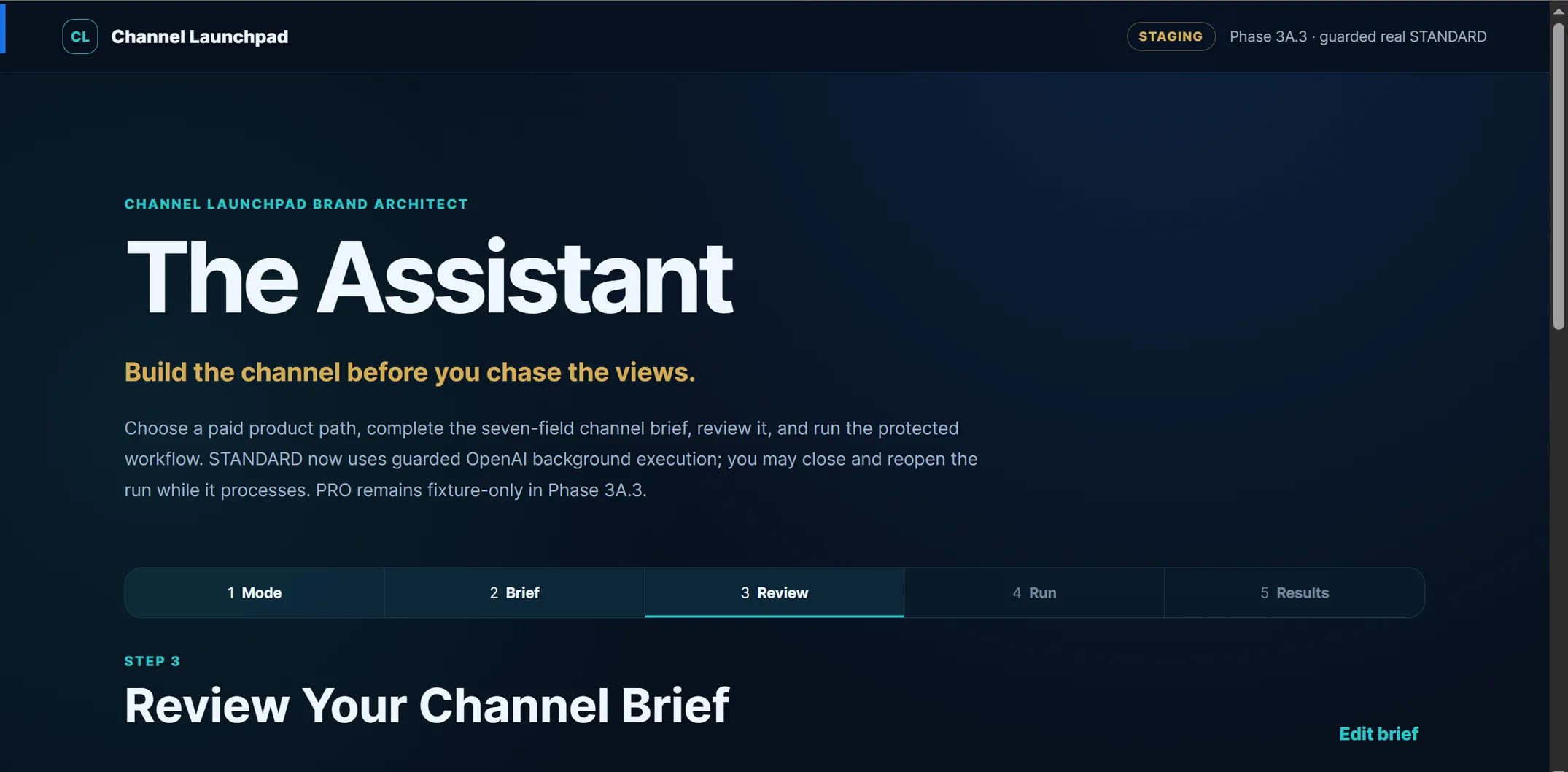 Screen 04
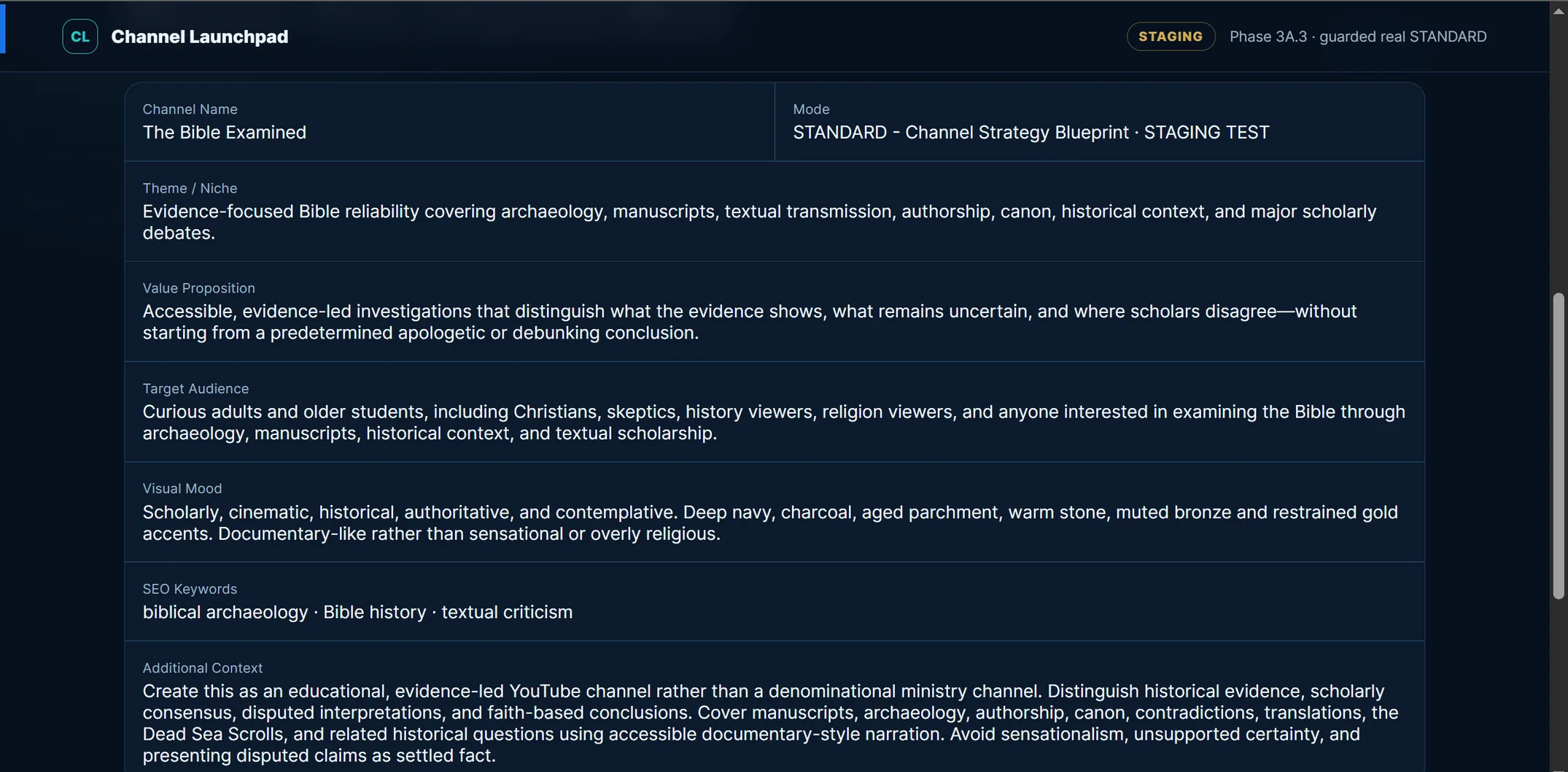 Screen 05
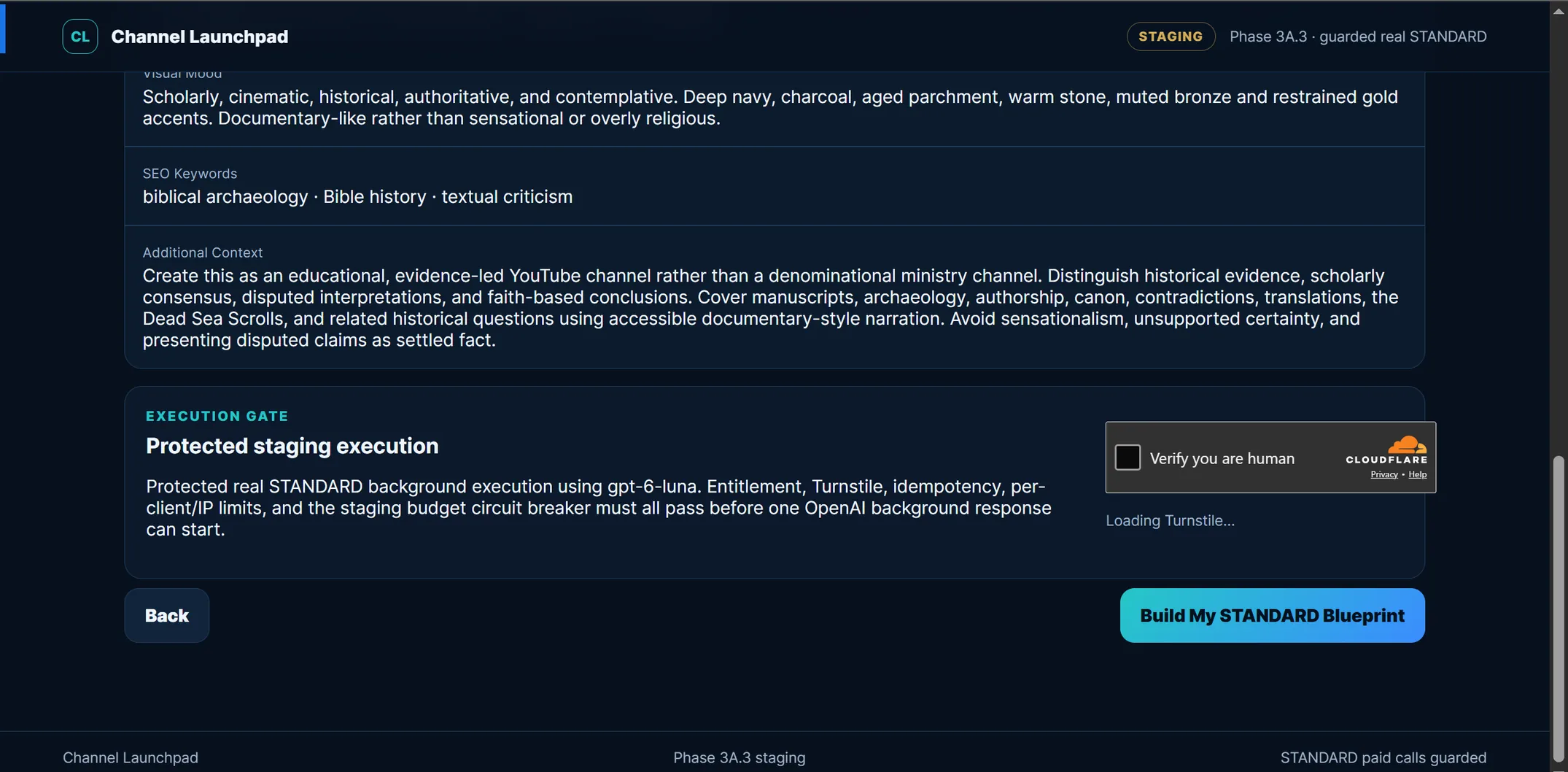 Screen 06
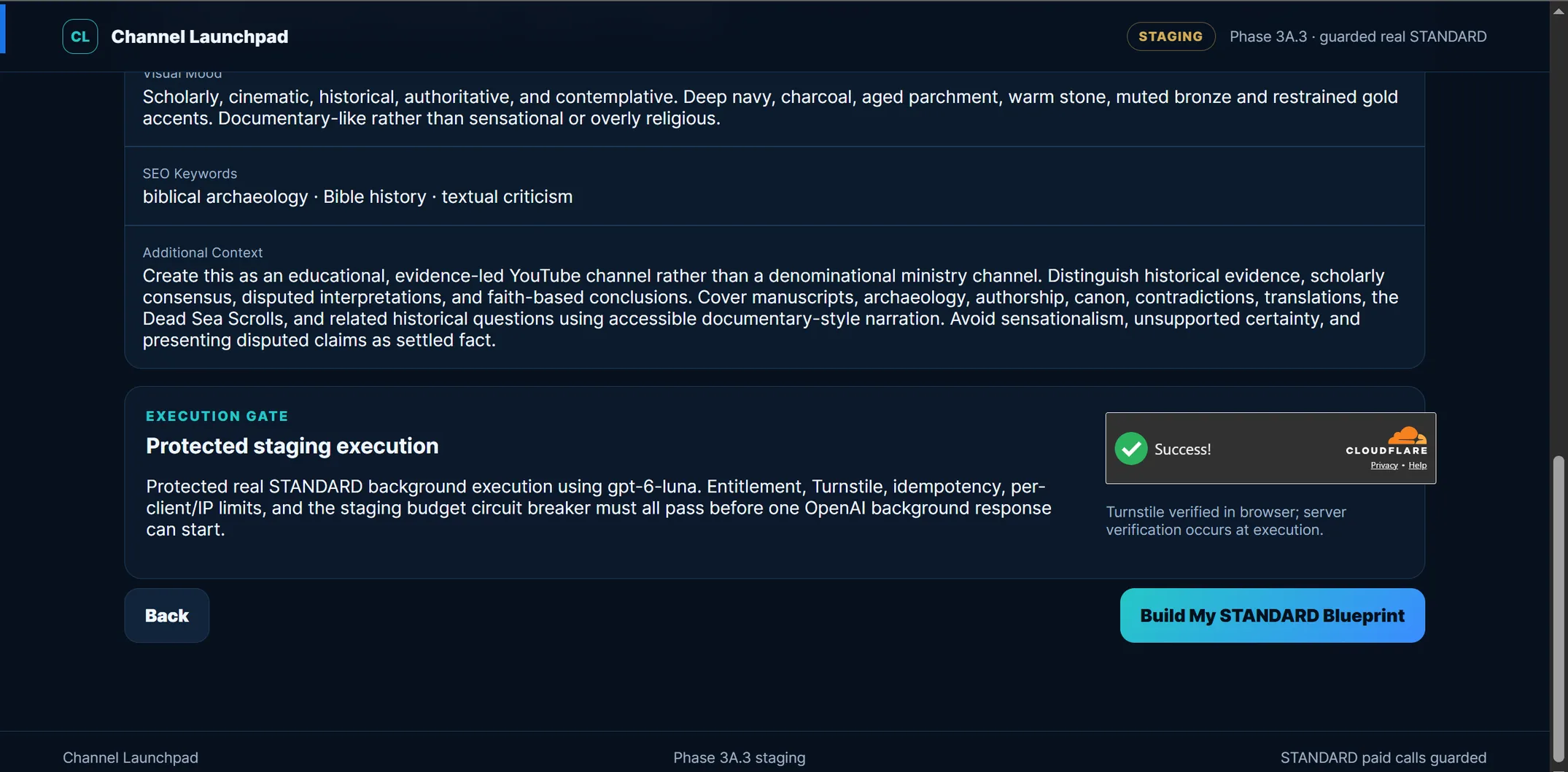 Screen 07
 Screen 08Screen 09
 Screen 10
 Screen 11
 Screen 12
 Screen 13
 Screen 14
 Screen 15
 Screen 16
 Screen 17
 Screen 18
 Screen 19
 Screen 20
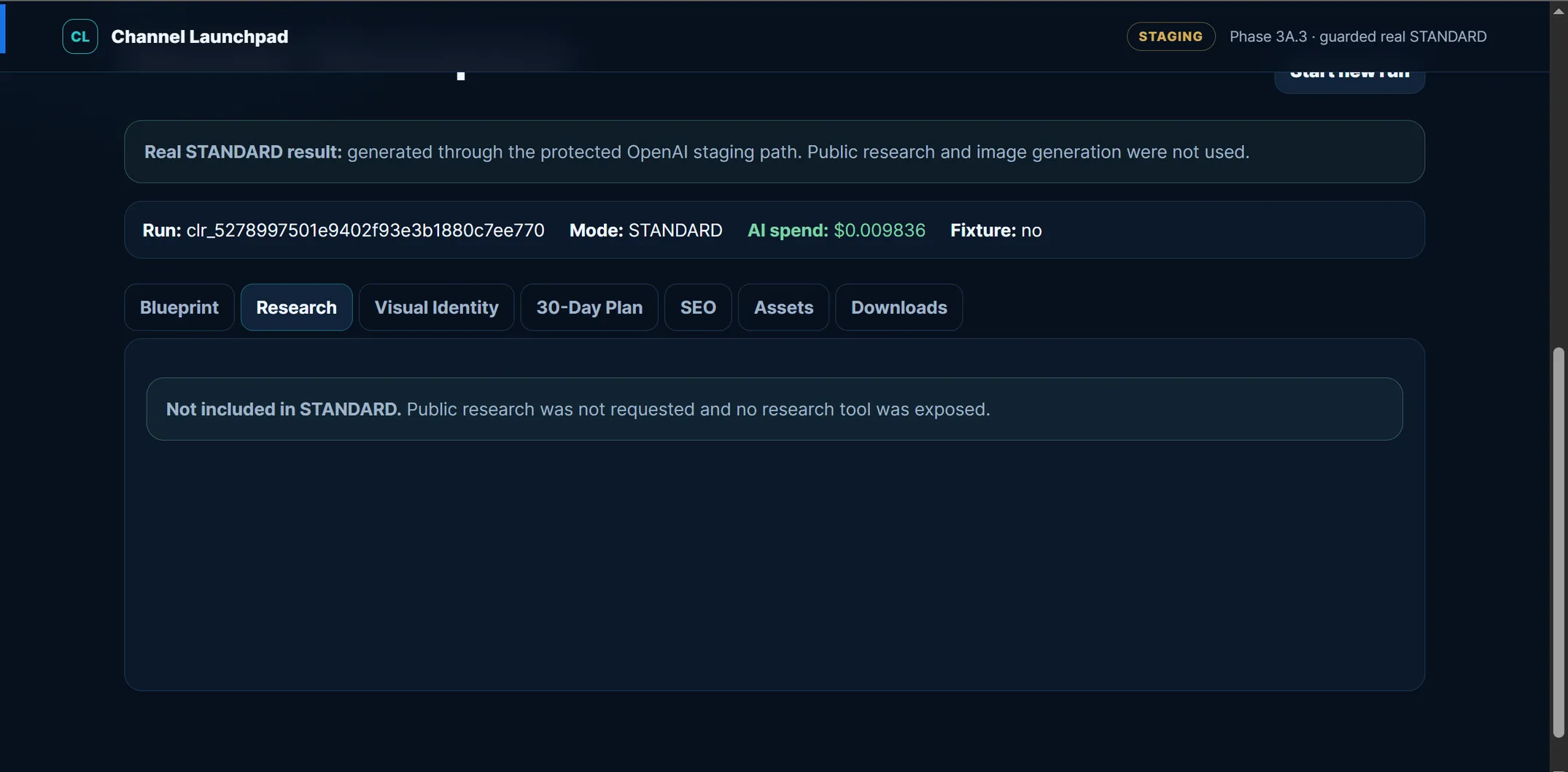 Screen 21
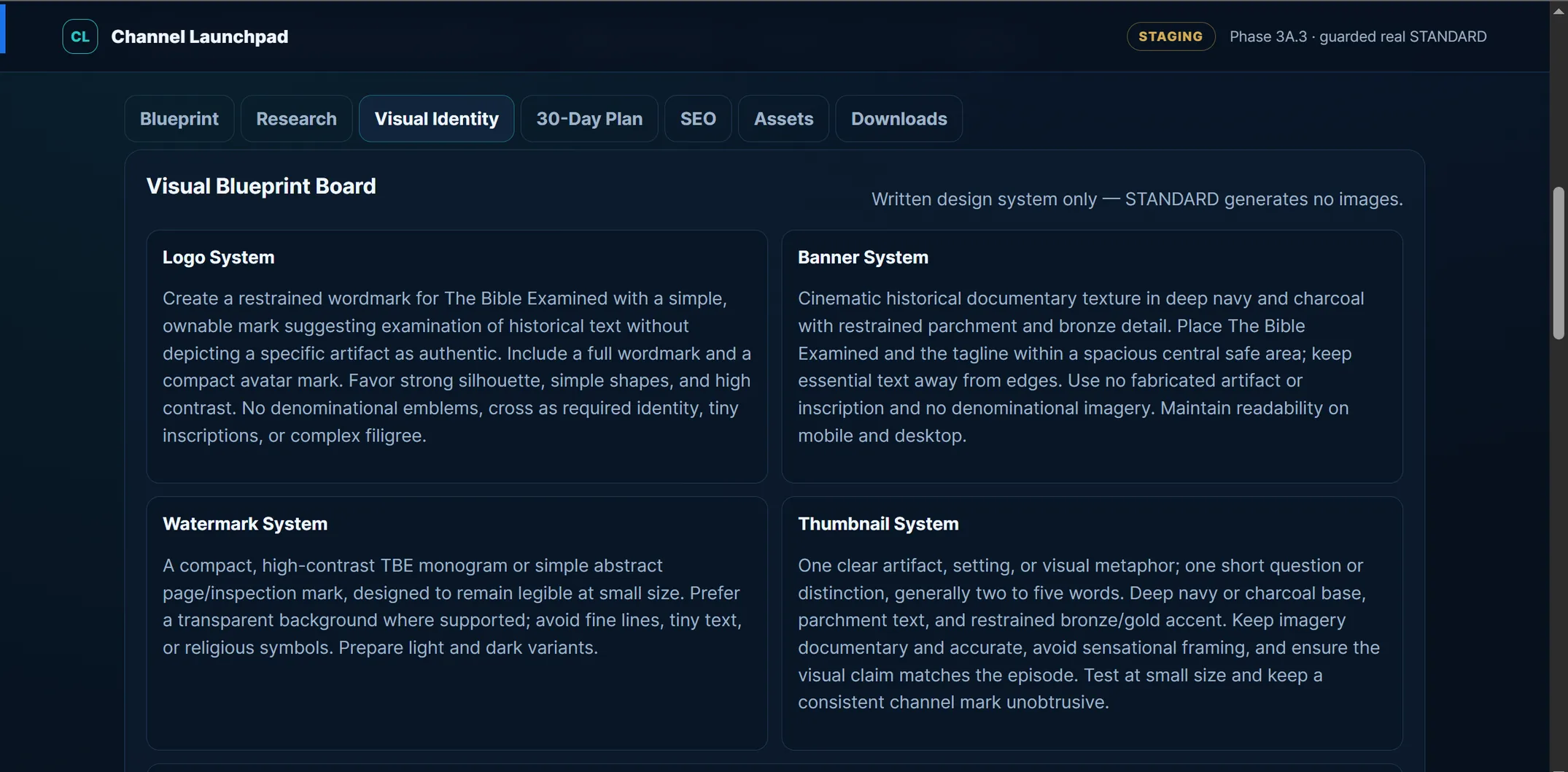 Screen 22
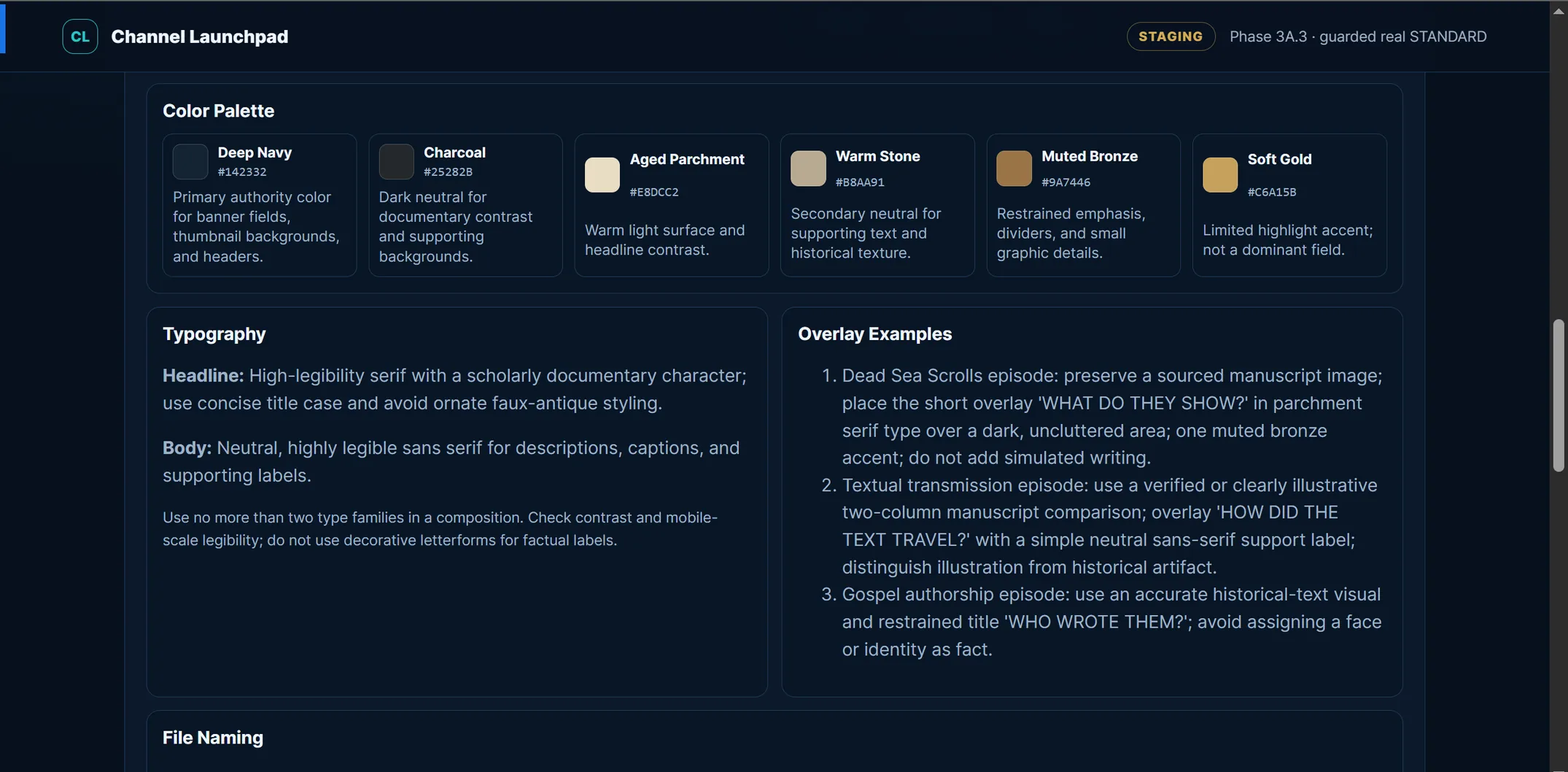 Screen 23
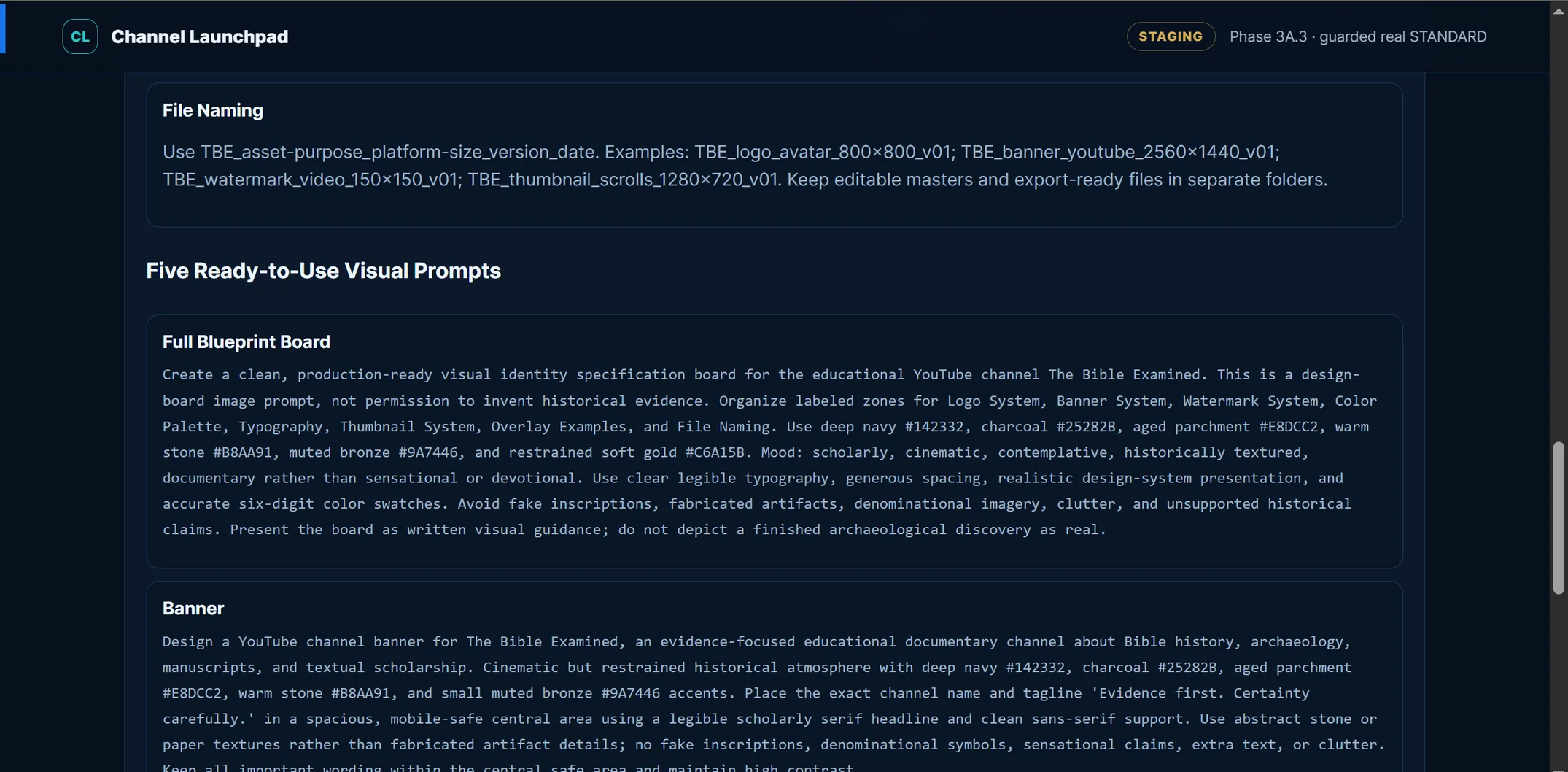 Screen 24
 Screen 25
 Screen 26
 Screen 27
 Screen 28
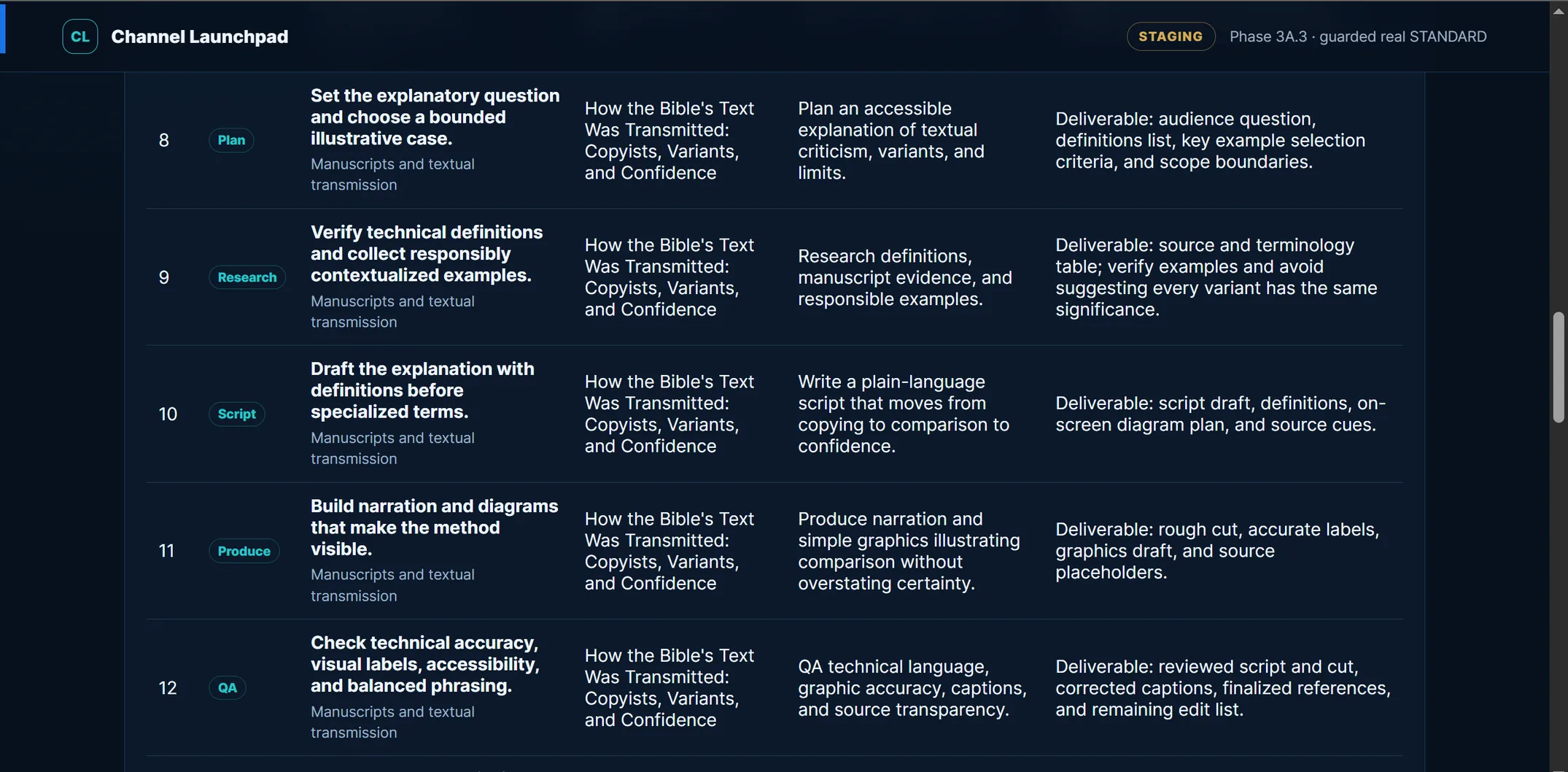 Screen 29
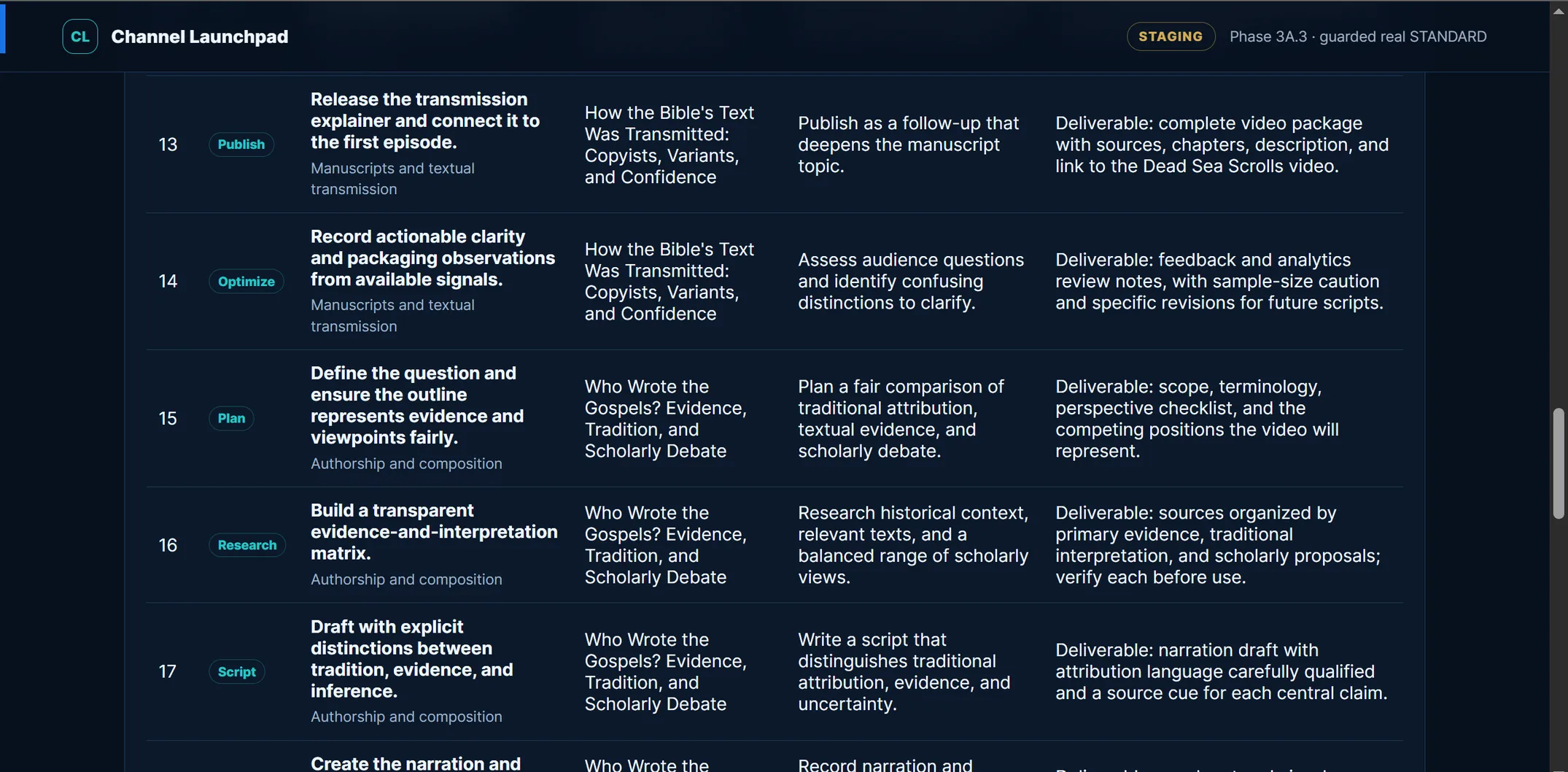 Screen 30
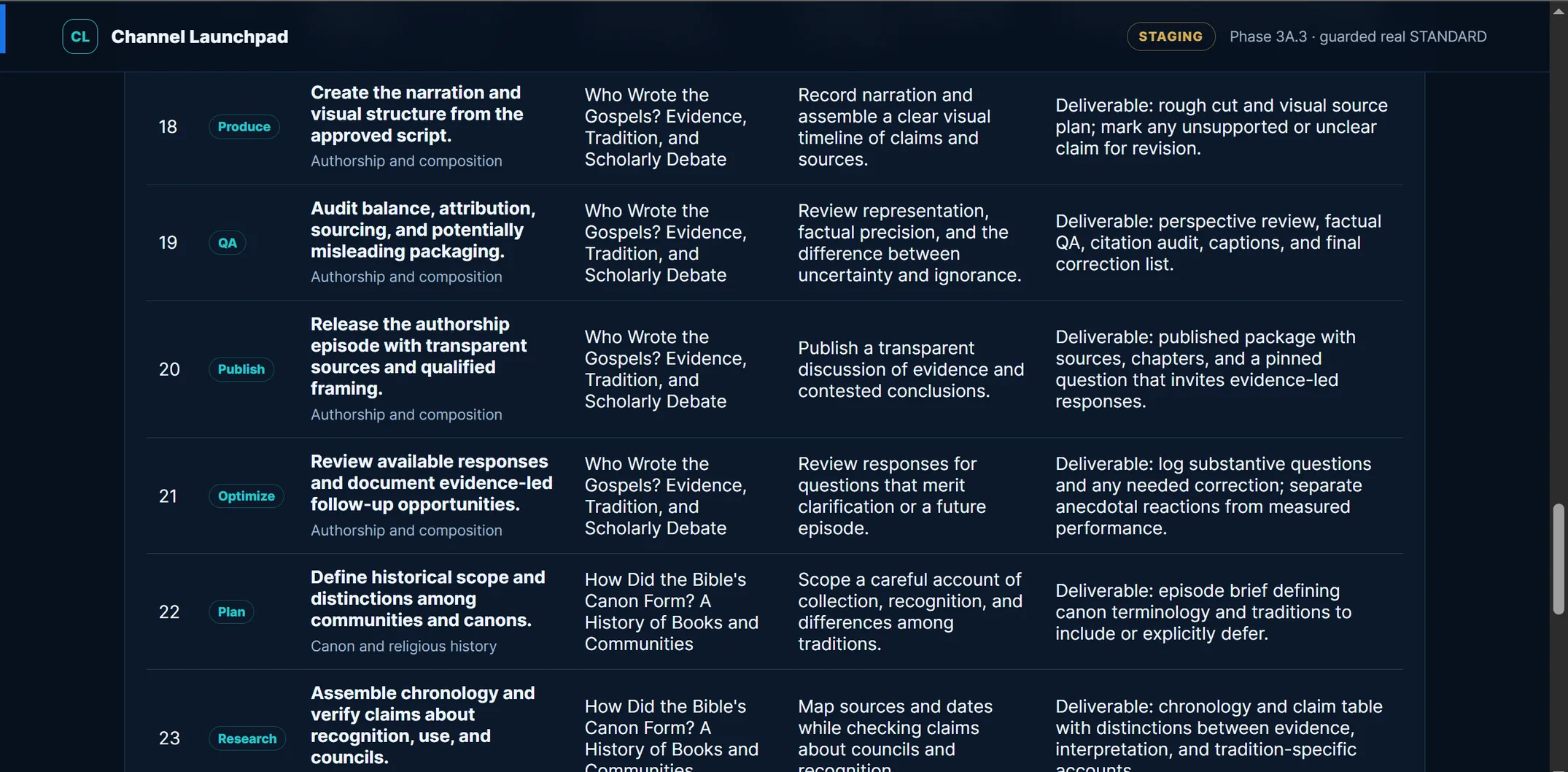 Screen 31
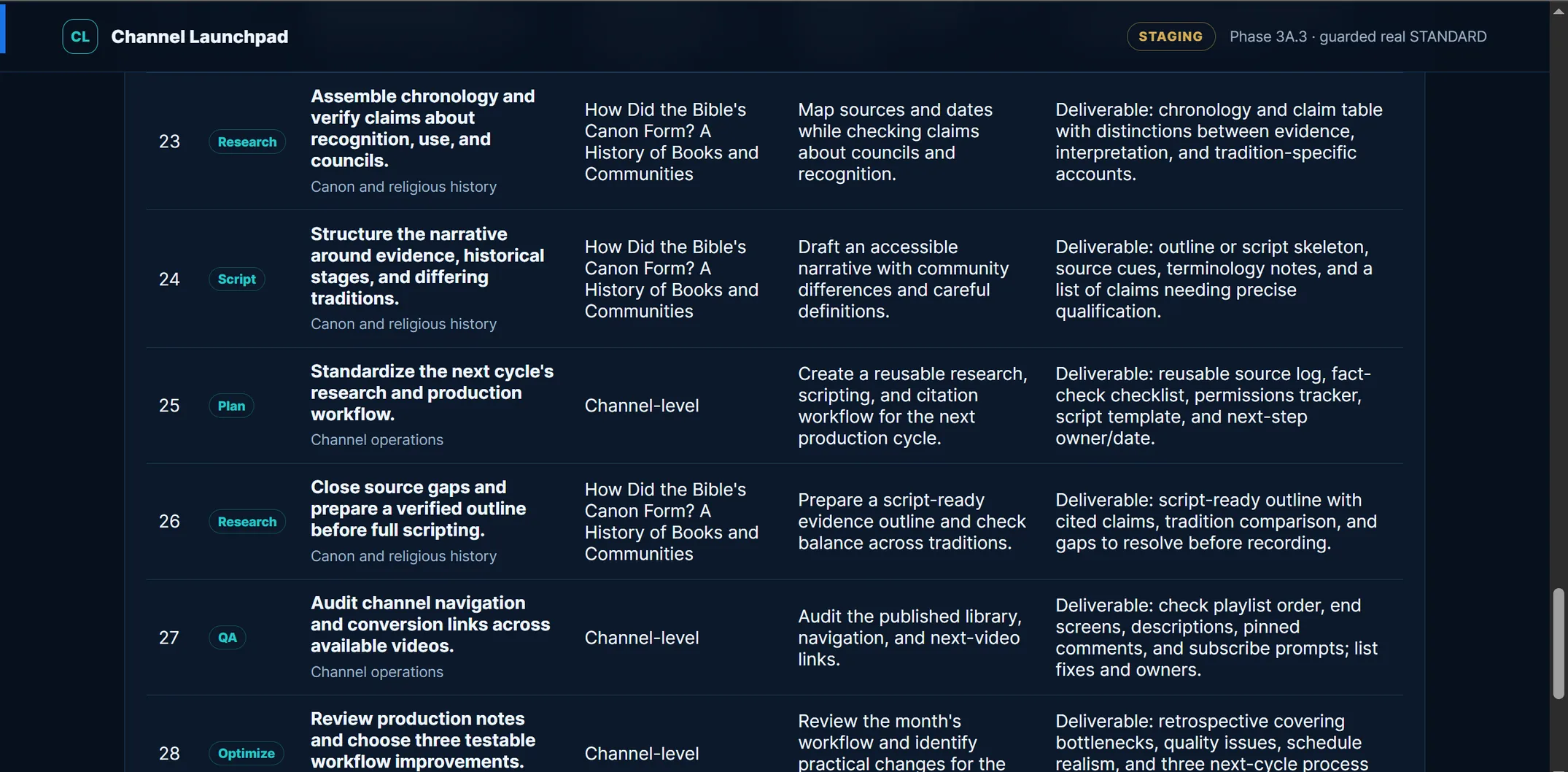 Screen 32
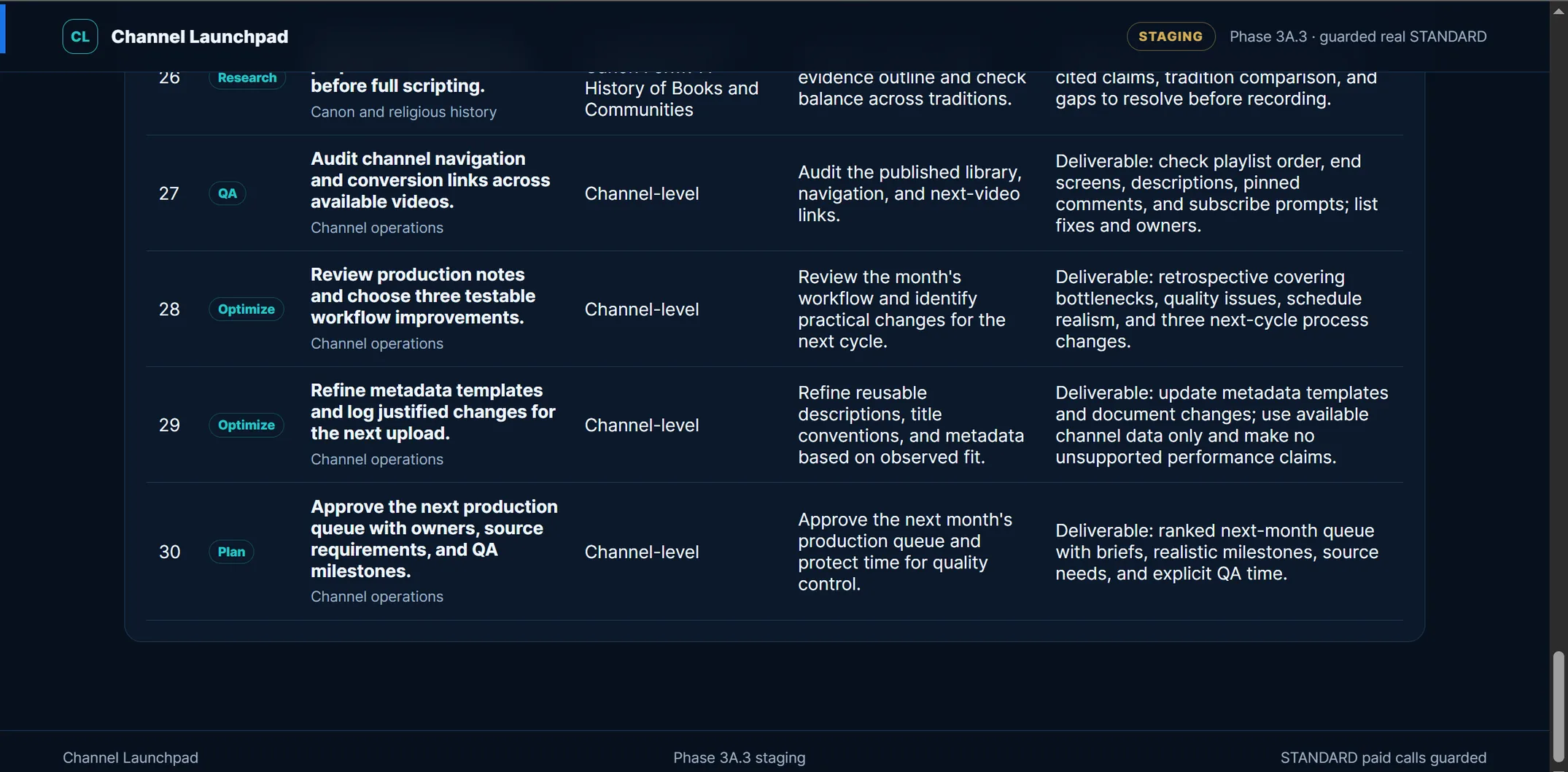 Screen 33
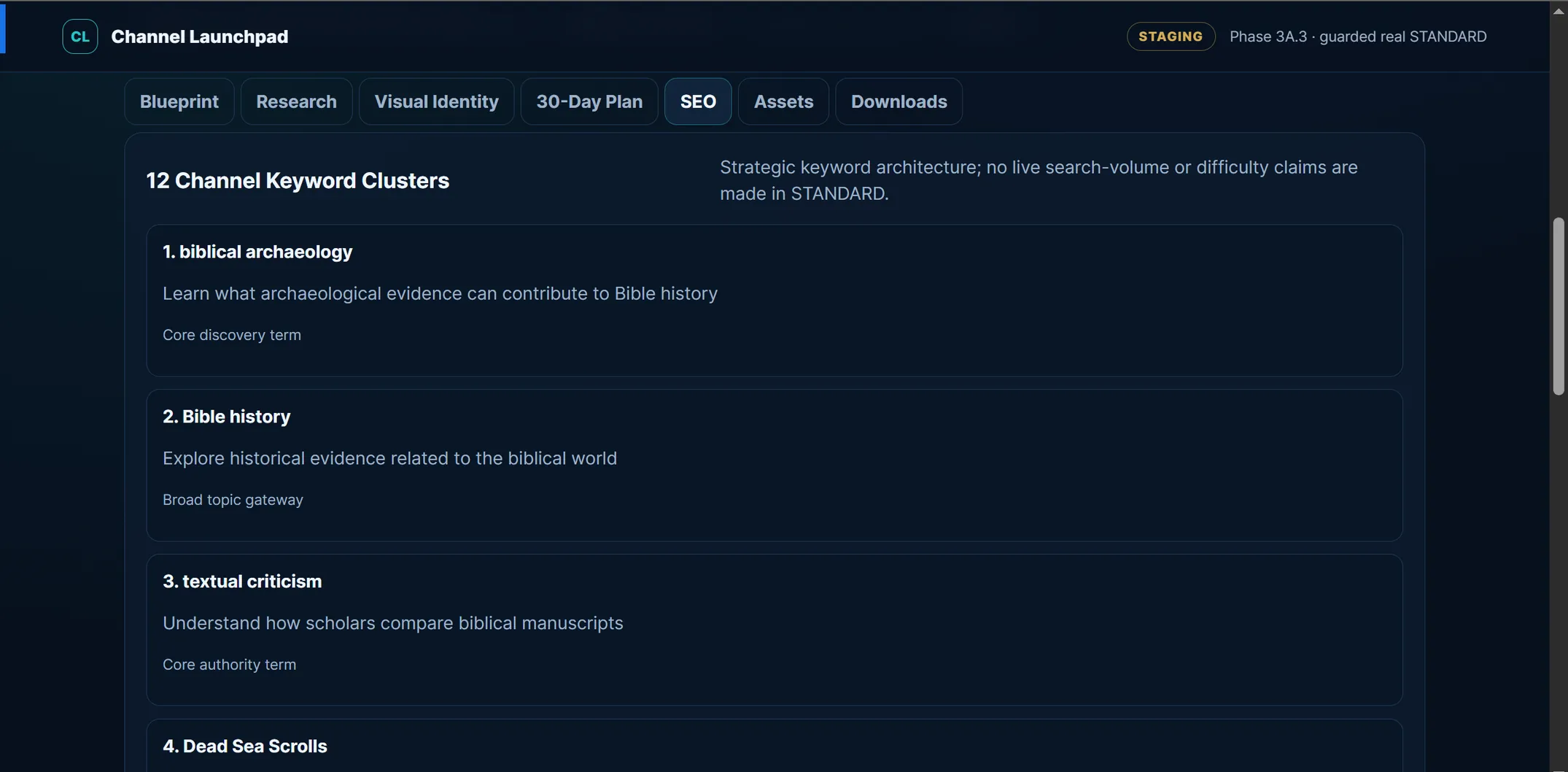 Screen 34
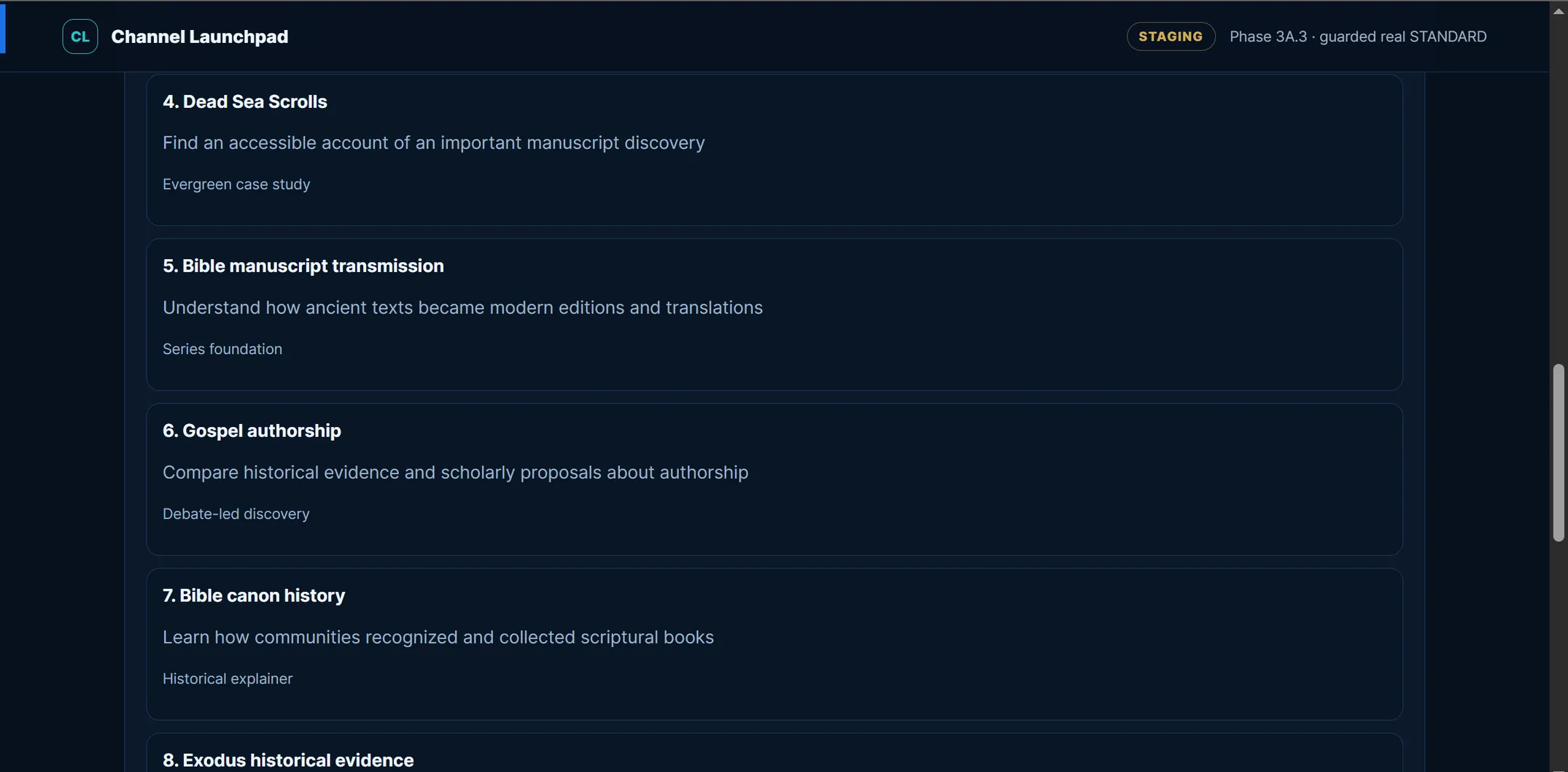 Screen 35
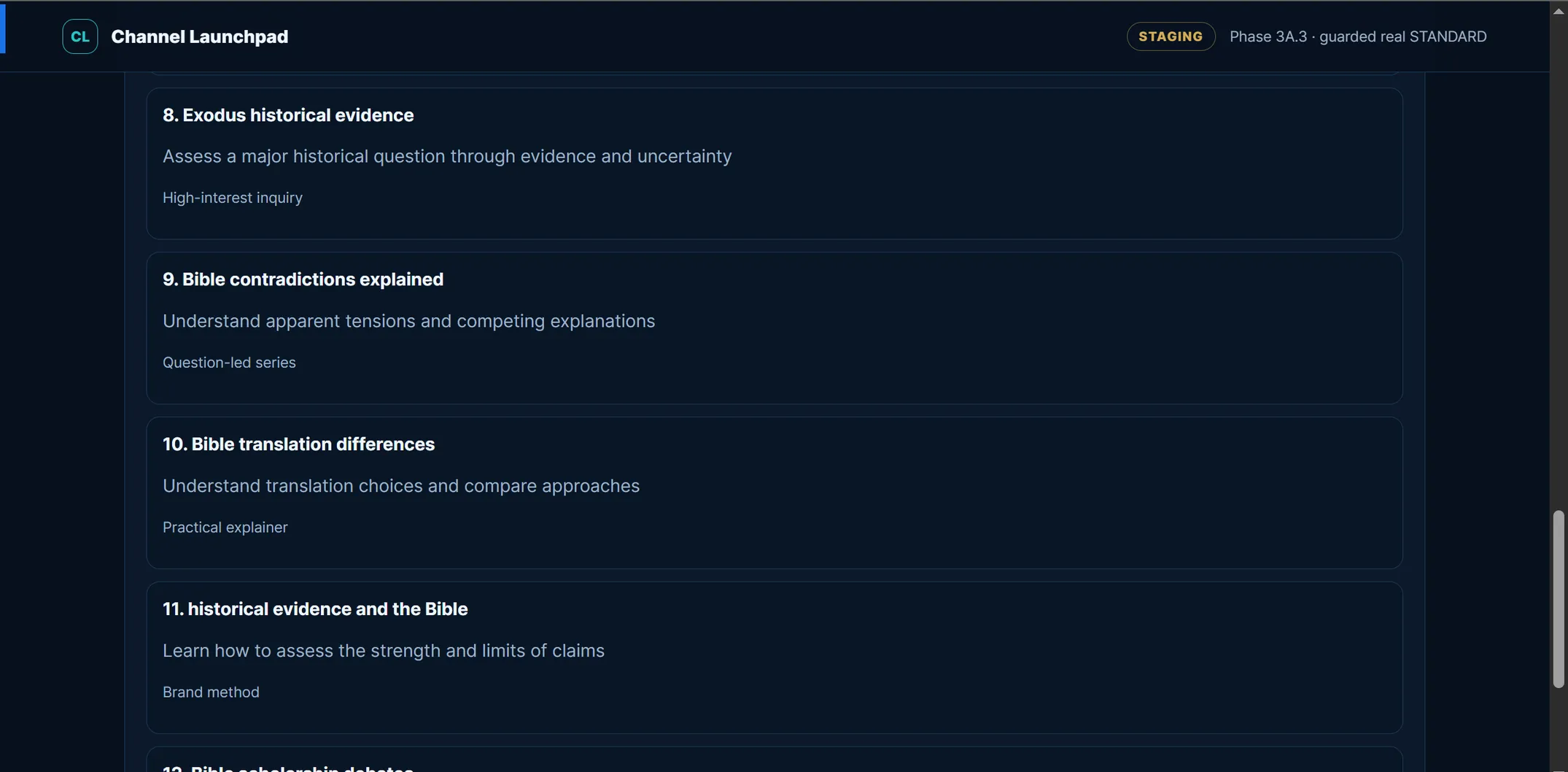 Screen 36
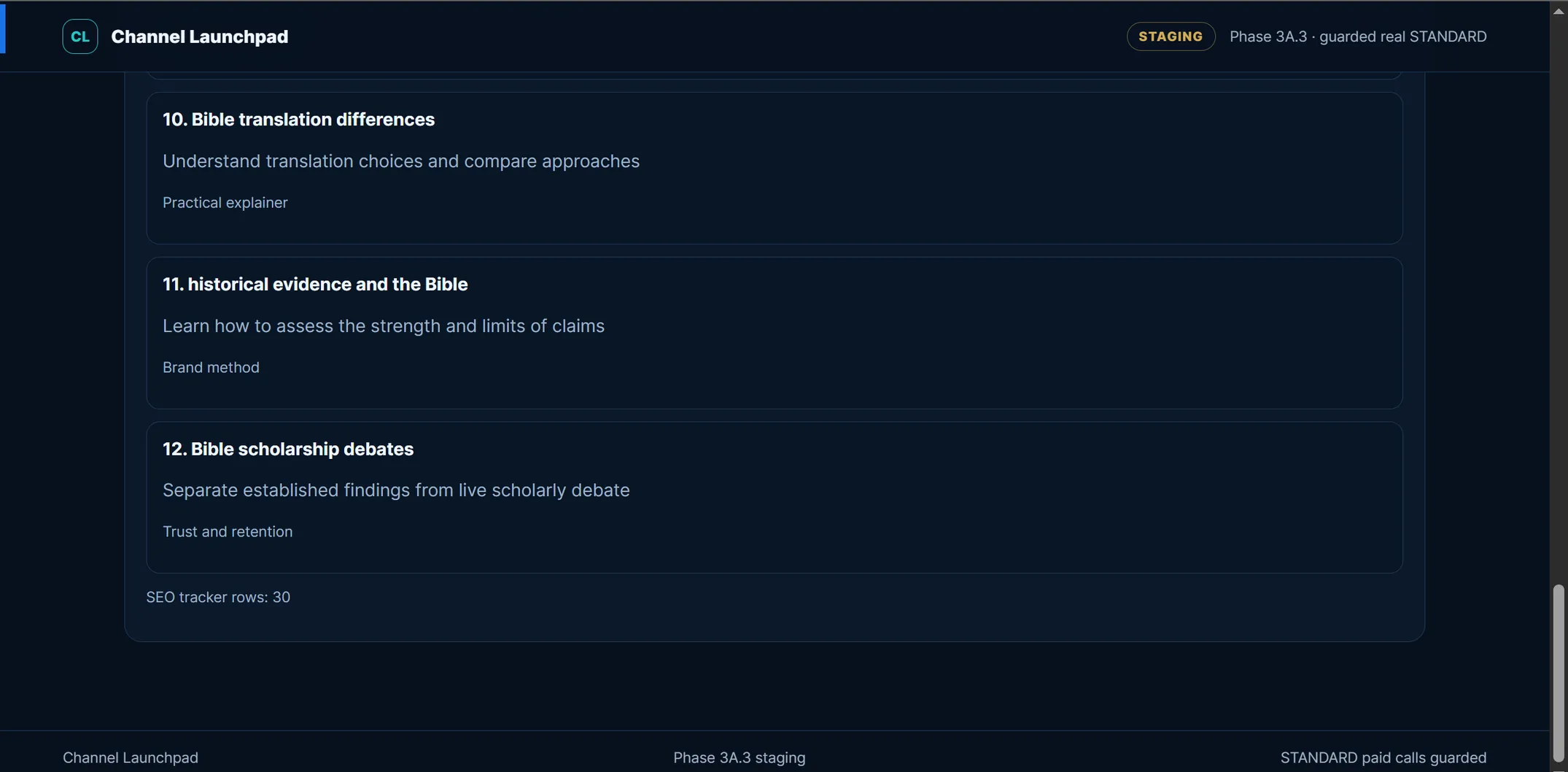 Screen 37
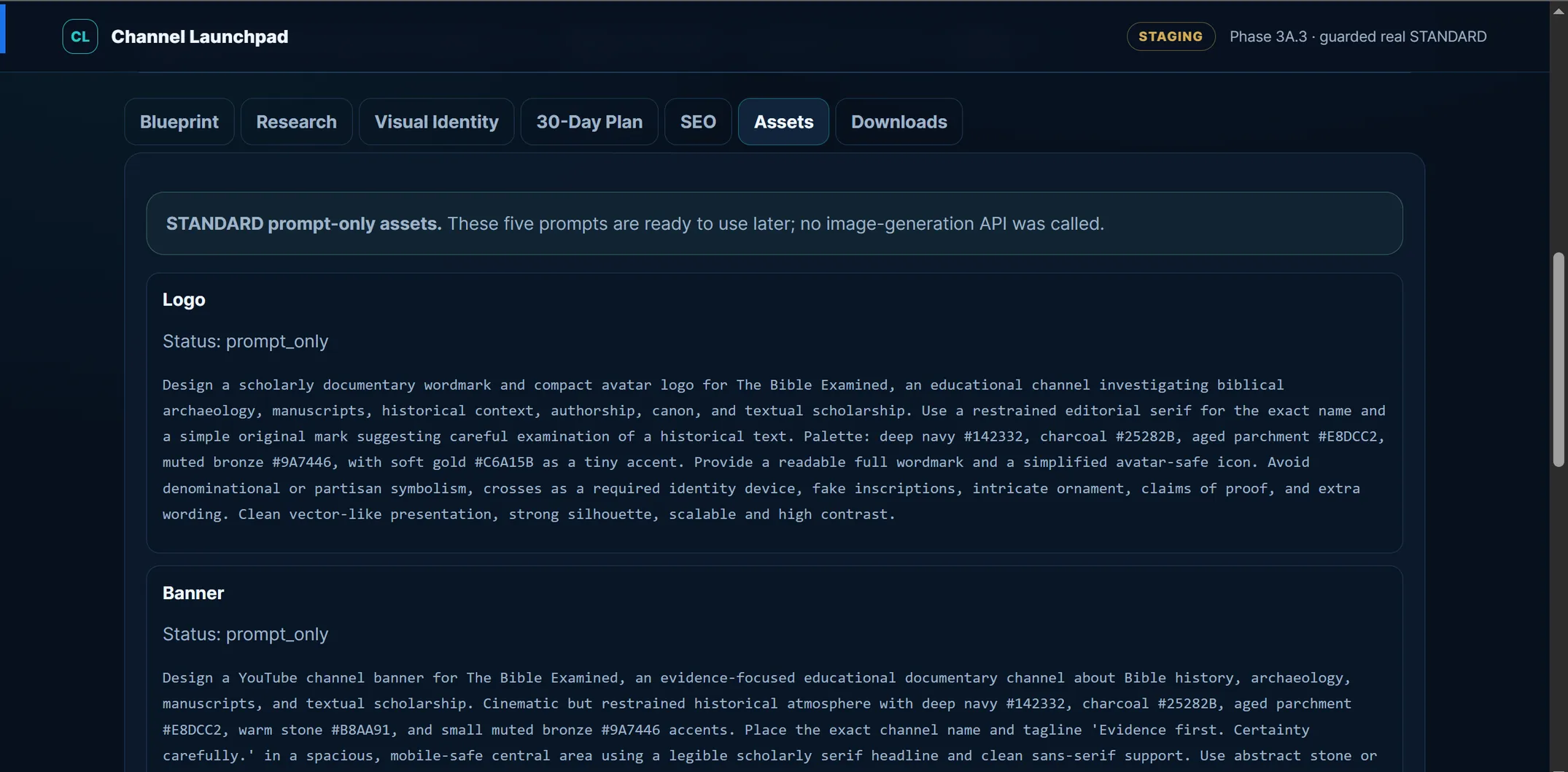 Screen 38
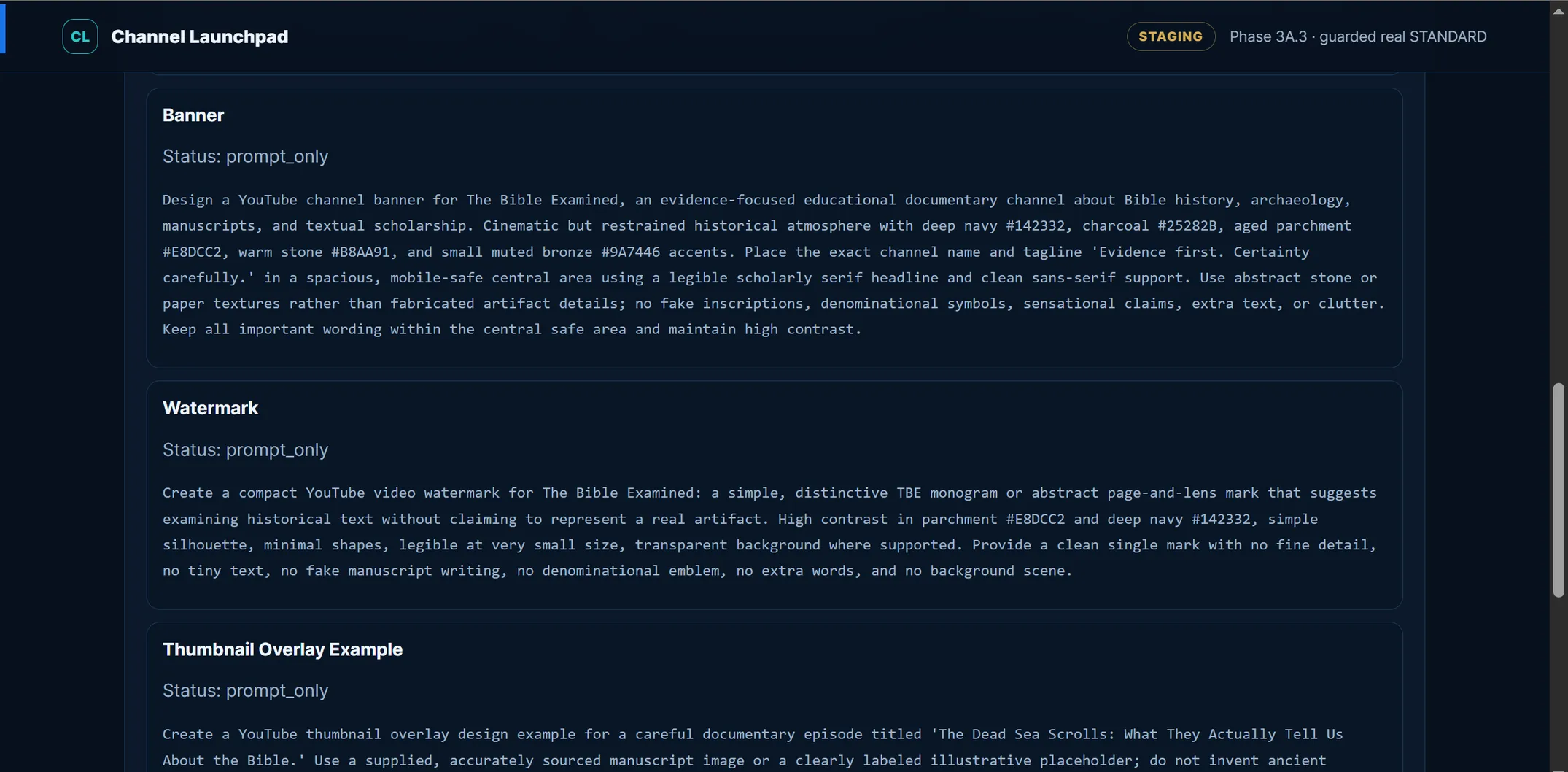 Screen 39
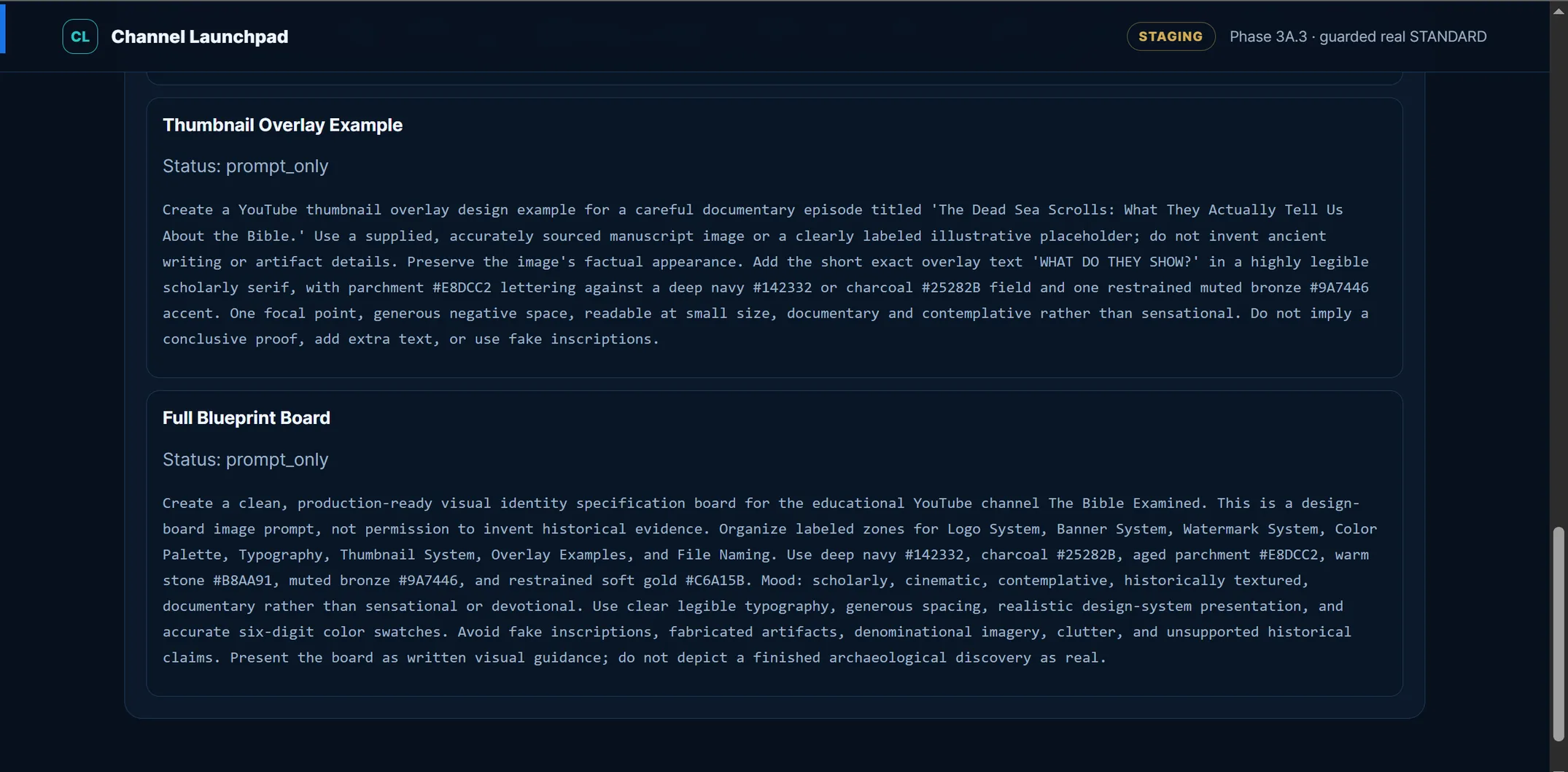 Screen 40